ScaleOps Unveils AI Infra Product to Enhance GPU Efficiency in Enterprise AI Deployments
ScaleOps has expanded its cloud resource management suite with the introduction of a new AI infrastructure product tailored for enterprises running self-hosted large language models (LLMs) and GPU-intensive AI workloads. This solution aims to address critical challenges in GPU utilization, performance consistency, and operational complexity that have emerged with the rapid growth of AI applications.
Significant Cost Reductions and Performance Improvements
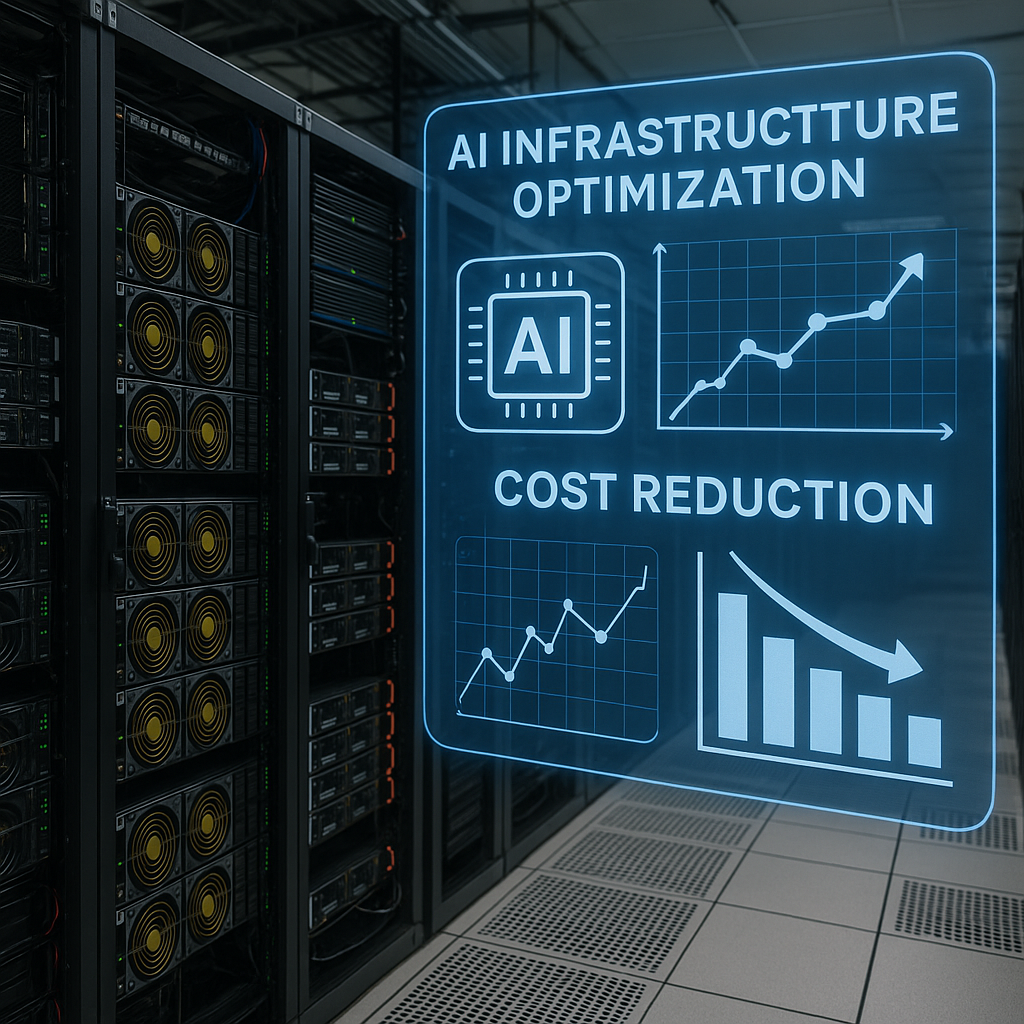
The company announced that early adopters of the AI Infra Product have realized GPU cost reductions ranging from 50% to 70%. These figures stem from enhanced resource allocation, workload-aware scaling, and reduced latency in AI model loading. While ScaleOps does not disclose fixed pricing publicly, it offers customized quotes based on organizational needs.
Yodar Shafrir, CEO and Co-Founder of ScaleOps, explained in correspondence with VentureBeat that the platform employs both proactive and reactive strategies to manage sudden traffic spikes, ensuring consistent performance without disruption. He emphasized the system’s ability to minimize GPU cold-start delays, a common bottleneck in AI workloads, by guaranteeing rapid response times during demand surges.
Addressing Enterprise Challenges in AI Infrastructure
Self-hosted AI environments often suffer from GPU underutilization, inconsistent performance, and lengthy model load times. ScaleOps’ new product dynamically allocates and scales GPU resources in real time, adapting seamlessly to fluctuating traffic without requiring changes to existing deployment pipelines or application code.
The platform is already operational in production for various high-profile clients, including Wiz, DocuSign, Rubrik, Coupa, Alkami, Vantor, Grubhub, Island, Chewy, and several Fortune 500 companies. Its workload-aware scaling policies proactively adjust capacity to maintain performance during peak demand, significantly reducing latency related to large model load times.
Seamless Integration Across Diverse Environments
Designed for broad compatibility, the AI Infra Product supports all Kubernetes distributions, major cloud providers, on-premises data centers, and air-gapped setups. ScaleOps highlights that deployment requires no code modifications, infrastructure rewrites, or changes to existing manifests, allowing teams to integrate the platform effortlessly into their current GitOps, CI/CD, and monitoring workflows.
Shafrir noted that the system enhances rather than overrides existing scheduling and scaling mechanisms, respecting custom policies and configuration boundaries while incorporating real-time operational intelligence to optimize resource management.
Enhanced Monitoring and User Control
The platform offers detailed visibility into GPU utilization, model performance, and scaling decisions at multiple levels—pods, workloads, nodes, and clusters. Although default workload scaling policies are applied automatically, engineering teams retain the flexibility to adjust these settings as needed.
Installation is designed to be straightforward, with ScaleOps describing a two-minute setup process using a single helm flag, after which optimization can be activated with minimal user intervention. This reduces the manual tuning efforts typically required from DevOps and AIOps teams managing complex AI workloads.
Enterprise Use Cases Demonstrate Substantial ROI
-
A leading creative software company operating thousands of GPUs improved average utilization from 20%, consolidated idle capacity, and enabled GPU node scaling, resulting in over 50% reduction in GPU expenses alongside a 35% decrease in latency for critical workloads.
-
A multinational gaming firm optimized a dynamic LLM workload across hundreds of GPUs, increasing utilization sevenfold while maintaining service levels. This deployment is projected to save approximately $1.4 million annually.
ScaleOps emphasizes that the cost savings generated by the product generally surpass the expenses related to its adoption and operation, delivering rapid return on investment even for organizations with constrained infrastructure budgets.
Industry Context: Tackling the Complexity of Cloud-Native AI Infrastructure
The surge in self-hosted AI models has introduced new operational complexities, particularly regarding effective GPU resource management at scale. Shafrir described the current landscape as one where cloud-native AI infrastructure is reaching a critical juncture, with escalating waste, performance bottlenecks, and soaring costs becoming common challenges.
“Cloud-native architectures unlocked great flexibility and control, but they also introduced a new level of complexity,” Shafrir stated. “Managing GPU resources at scale has become chaotic—waste, performance issues, and skyrocketing costs are now the norm. The ScaleOps platform was built to fix this.”
He further highlighted that the AI Infra Product consolidates comprehensive cloud resource management functions needed to orchestrate diverse AI workloads efficiently, providing enterprises with a unified, automated approach to optimize LLM and AI application performance cost-effectively.
A Forward-Looking Solution for Enterprise AI Workloads
With this product launch, ScaleOps aims to position itself as a key enabler for cost-effective and high-performance self-hosted AI deployments. The early metrics and customer testimonials underscore the platform’s potential to become a standard solution for GPU and AI workload management within complex enterprise environments.

Related Articles
 Gridcare Raises $13.3 Million to Unlock Hidden Data Center Capacity in the Electrical Grid
 Uber Unveils Spacious Robotaxi Developed with Lucid and Nuro at CES 2026
 OpenAI Acquires Ona to Enhance Codex with Persistent Cloud Environments
 Anthropic’s IPO Filing Signals Generative AI’s Shift to Enterprise Utility