Researchers from Meta, the University of Chicago, and UC Berkeley have unveiled DreamGym, a pioneering framework designed to tackle the significant challenges of training large language model (LLM) agents through reinforcement learning (RL). By simulating RL environments, DreamGym enables efficient agent training for complex tasks while minimizing the high costs and infrastructure demands traditionally associated with live RL setups.
Challenges in Training Large Language Model Agents with Reinforcement Learning
Reinforcement learning is a crucial method for enhancing LLMs to perform intricate tasks within dynamic environments such as web navigation, tool utilization, and robotics. Unlike static dataset pre-training, RL allows models to learn from active interaction and feedback. However, deploying RL in real-world agent training remains problematic due to several factors:
- Sparse and delayed rewards: Agents often receive positive feedback only after completing long sequences of correct actions.
- High data costs: Collecting diverse, validated datasets typically requires expert human annotation and verification.
- Complex infrastructure: Building and maintaining live RL environments is resource-intensive and risky, especially when incorrect actions can cause irreversible damage.
These obstacles restrict the scalability and general applicability of RL for training AI agents. DreamGym offers a promising alternative by replicating RL training entirely within a simulation, thereby eliminating many of these barriers.
How DreamGym Innovates Reinforcement Learning Training
DreamGym is described as a unified and scalable reinforcement learning framework that synthesizes diverse experience data online to facilitate effective LLM agent training. Its design revolves around three integral components:
- Reasoning-based experience model: This module simulates the target environment’s dynamics within a textual space, allowing the agent to interact with a consistent, abstracted version of the environment. For example, in web shopping tasks, it generates clean, structured page elements rather than raw HTML, which reduces complexity and data requirements.
- Experience replay buffer: Acting as a dynamic memory, this buffer starts with offline data seeds and continuously incorporates newly generated synthetic experiences. It guides the experience model to maintain diversity and factual grounding throughout training.
- Curriculum task generator: Working alongside the experience model, this component adaptively produces progressively challenging tasks by focusing on those where the agent’s performance is mixed, encouraging skill advancement.
Collectively, these parts form a closed-loop training system that addresses key RL limitations: high cost, limited task diversity, unstable reward signals, and infrastructure overhead.
Demonstrated Performance and Versatility of DreamGym
The research team evaluated DreamGym across multiple benchmarks, including WebShop (e-commerce), ALFWorld (embodied control), and WebArena (complex web interaction). Using advanced LLMs like Llama 3 and Qwen 2.5 as agent backbones, DreamGym was benchmarked against traditional offline and online RL methods.
Notably, DreamGym excelled in environments where traditional RL infrastructures are difficult to establish, such as WebArena, achieving success rates over 30% higher than baseline approaches. In scenarios where RL is feasible but expensive, DreamGym matched the performance of algorithms like Proximal Policy Optimization (PPO) and Group Relative Policy Optimization (GRPO) without costly real-world interactions.
The framework also introduced a sim-to-real training method, DreamGym-S2R, which pre-trains agents in synthetic environments before fine-tuning with limited real-world data. This approach improved performance by over 40% compared to training solely in real settings while using less than 10% of the external data, offering a scalable “warm start” for agent learning.
Additionally, DreamGym agents demonstrated strong generalization, transferring skills learned in one domain effectively to others. This is attributed to learning within an abstract meta-representation space, focusing on domain-agnostic behavioral patterns rather than memorizing specific tasks.
Implications for Enterprises and Future AI Agent Development
Currently in early development, DreamGym reveals the significant potential of simulation-based RL to reduce training costs and complexity for AI agents. Enterprises can leverage small amounts of task descriptions and interaction trajectories to bootstrap DreamGym’s framework, enabling scalable and sample-efficient training for customized applications without exposing systems to risks inherent in live environments.
This advancement could democratize RL adoption across industries, facilitating the creation of versatile AI agents tailored to diverse real-world challenges.
Fonte: ver artigo original

Related Articles
 Separating Logic and Search Enhances Scalability of AI Agents in Enterprise Applications
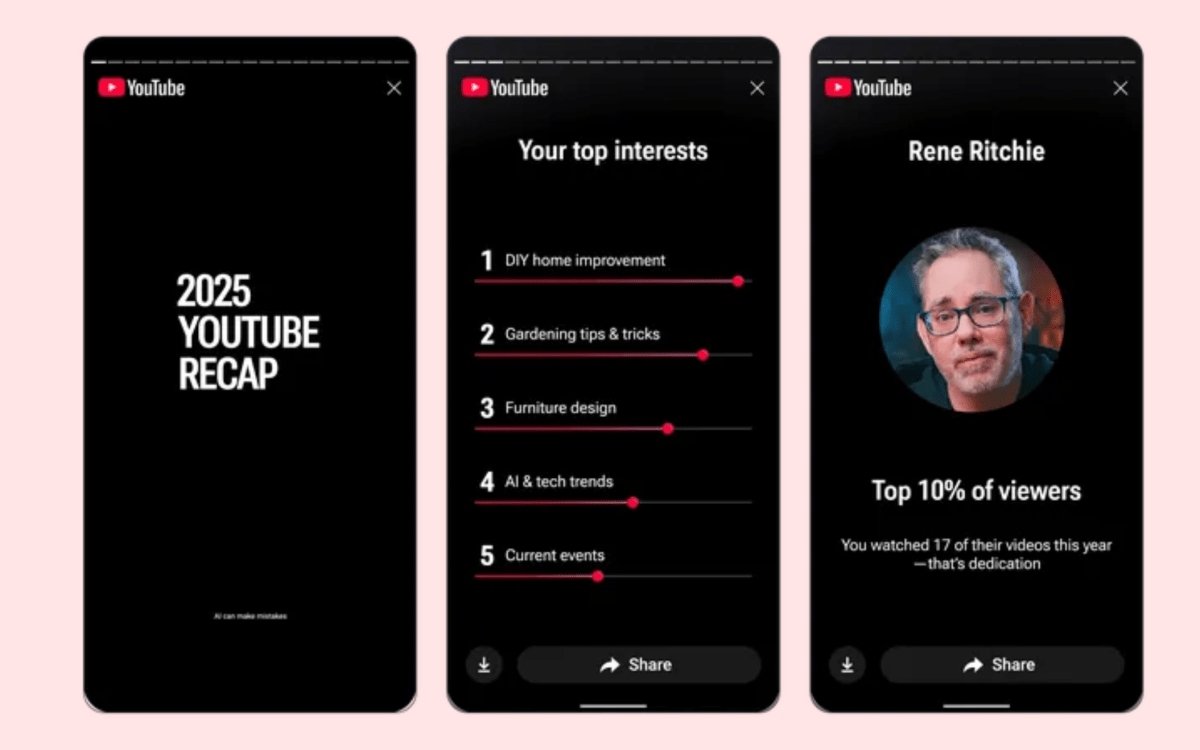 YouTube Unveils First-Ever Personalized Viewing Recap Powered by AI Insights
 Alibaba Unveils Quark AI Glass Series to Rival Meta and Leading Competitors
 The True Energy Cost of AI: Understanding the Electricity Behind Model Training