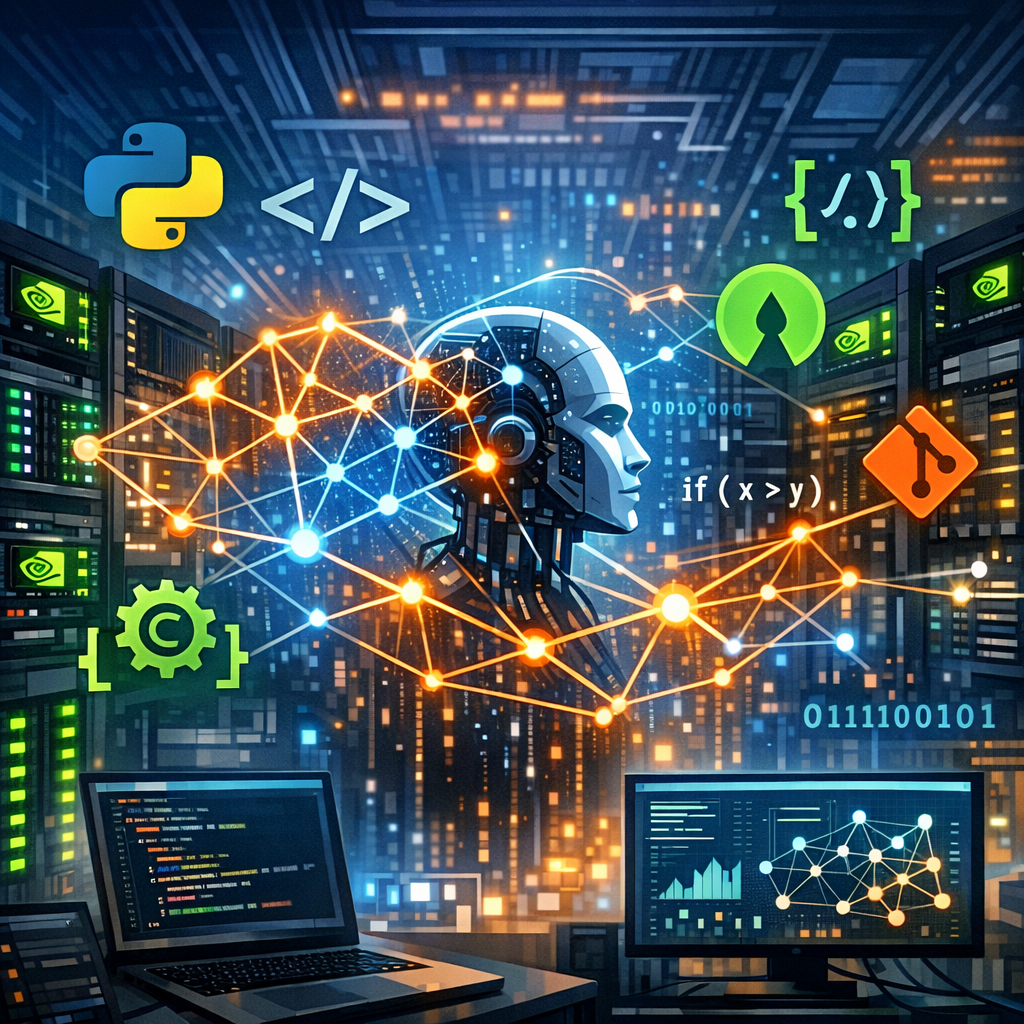
# Quantum Computing Meets AI: The Next Frontier in Technology
In recent years, artificial intelligence (AI) has made significant strides, reshaping industries and enhancing everyday life. However, the intersection of AI and quantum computing is poised to take this transformation to unprecedented levels. The combination of these two revolutionary technologies promises not only to accelerate data processing but also to unlock solutions to complex problems that have long eluded traditional computing methods.
## The Rise of Quantum Computing
Quantum computing harnesses the principles of quantum mechanics to process information in ways that classical computers cannot. Unlike traditional bits, which can represent either a 0 or a 1, quantum bits (qubits) can exist in multiple states simultaneously. This allows quantum computers to perform complex calculations at speeds that are exponentially faster than their classical counterparts.
– **Quantum Speed**: Quantum computers can solve problems in seconds that would take classical computers thousands of years.
– **Parallel Processing**: The ability of qubits to be in multiple states enables quantum computers to explore many possible solutions simultaneously.
– **Applications Across Industries**: From cryptography to drug discovery, the potential applications of quantum computing are vast.
Major tech companies, including Google, IBM, and Microsoft, are heavily investing in quantum computing research, aiming to develop machines capable of performing tasks that are currently impossible.
## How AI and Quantum Computing Intersect
The fusion of AI and quantum computing is set to enhance various aspects of machine learning and data analysis. AI algorithms require immense computational power, especially when dealing with vast datasets. Quantum computing can provide that power, making it easier for AI to learn and adapt.
### Key Benefits of Combining AI with Quantum Computing
1. **Enhanced Data Processing**: Quantum computers can process large datasets more efficiently, enabling AI models to learn faster and make more accurate predictions.
2. **Improved Optimization**: Many AI applications involve optimization problems. Quantum algorithms can potentially find optimal solutions more quickly than classical approaches.
3. **Solving Complex Problems**: Quantum computing can tackle complex simulations and models in fields like climate science, finance, and healthcare that are currently beyond reach.
For instance, companies like D-Wave Systems are already exploring how quantum annealing can optimize machine learning models, while researchers at IBM are investigating the use of quantum circuits for neural networks.
## Industry Leaders and Their Innovations
Several companies are leading the charge in the convergence of AI and quantum computing, each contributing unique innovations to the field.
– **Google**: Known for its pioneering work in quantum supremacy, Google is also exploring how quantum algorithms can enhance machine learning processes, aiming to develop more efficient AI systems.
– **IBM**: With its IBM Quantum Experience platform, IBM is not only advancing quantum hardware but also creating tools to integrate quantum computing with AI, focusing on practical applications in business and science.
– **Microsoft**: Through its Azure Quantum platform, Microsoft is working on making quantum computing more accessible, providing tools for developers to create AI algorithms that leverage quantum capabilities.
## Challenges and Future Prospects
While the potential of AI and quantum computing is immense, there are significant challenges to overcome before these technologies can fully integrate. Key issues include:
– **Technical Hurdles**: Building stable and scalable quantum systems remains a significant challenge, as qubits are sensitive to their environment and can easily lose their quantum state.
– **Algorithm Development**: There is a need for new algorithms that can effectively harness quantum computing capabilities for AI tasks.
– **Ethical Considerations**: As with any powerful technology, ethical concerns surrounding AI applications in decision-making processes will need to be addressed.
Despite these hurdles, the future appears bright. As research and development continue to progress, we can expect to see breakthroughs that will redefine our understanding of what is possible with technology.
## Conclusion
The intersection of quantum computing and artificial intelligence represents one of the most exciting frontiers in technology today. As these fields converge, they hold the promise of unlocking new capabilities that could transform industries and enhance our daily lives. By harnessing the unique strengths of both technologies, we may soon find ourselves equipped to tackle some of the most challenging problems facing society.
As we move forward, the collaboration between AI and quantum computing will be key to realizing their full potential, and the efforts of leading companies will play a crucial role in shaping this new technological landscape.
Based on reporting from spectrum.ieee.org.
Based on external reporting. Original source: spectrum.ieee.org.

 CEO of Palantir Says He Spends a Large Amount of Time Talking to Nazis
 OpenAI Pushes to Make Its API Format the Industry Standard for AI Development
 Anthropic’s Claude AI Experiences Major Outage Affecting Users Worldwide
 Google Launches TranslateGemma: Advanced AI Translation Across 55 Languages