What happened
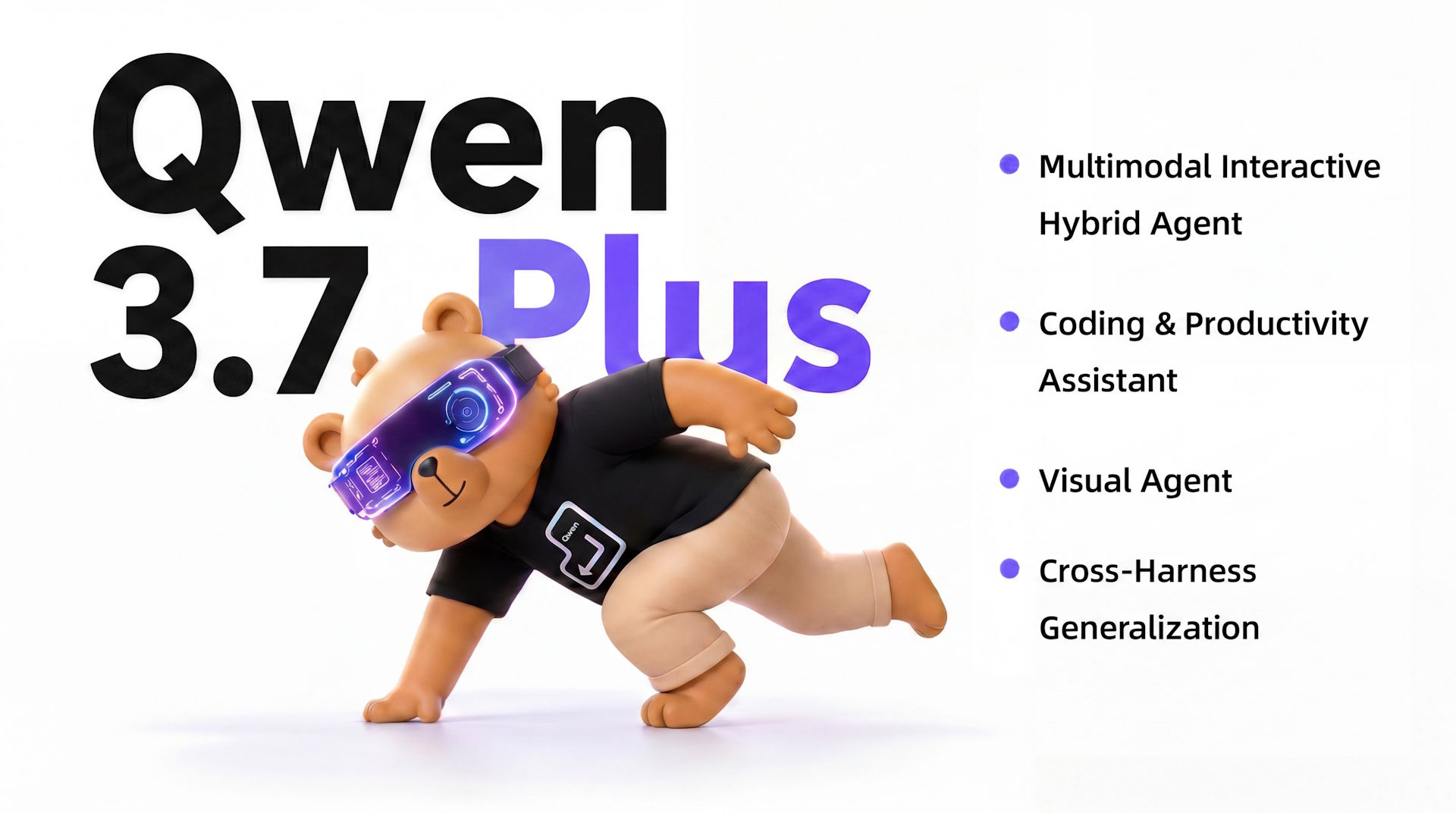
Alibaba Unveils Qwen3 Plus Advancing is at the center of this update. Alibaba's Qwen team introduces Qwen3.7-Plus, a cutting-edge multimodal AI model integrating visual perception, interface operation, and coding capabilities, aiming to create fully autonomous AI agents. Demonstrations highlight its potential despite mixed overall performance and competitive pricing compared to Western AI leaders.
Alibaba Launches Qwen3.7-Plus, Aiming to Pioneer Autonomous Multimodal AI Agents
Alibaba’s AI research team, Qwen, has recently announced the release of Qwen3.7-Plus, a proprietary multimodal agent designed to advance the development of autonomous artificial intelligence systems. This new model uniquely integrates visual perception, graphical user interface (GUI) operation, and programming within a unified agent framework, marking a significant step in the evolution of AI capabilities.
Multimodal Integration and Autonomous Coding
Qwen3.7-Plus showcases its multimodal functionality through an impressive demonstration where an AI agent autonomously developed a vocabulary learning application. Over the course of eleven hours, the agent executed approximately 1,000 sequential calls, generating more than 10,000 lines of code without human intervention. This highlights the model’s ability to handle complex tasks by combining perception, interaction, and coding in a continuous loop.
Performance and Market Positioning
According to Alibaba’s internal benchmarks, Qwen3.7-Plus leads in on-screen understanding tasks, which involve interpreting and interacting with visual interfaces. However, its overall performance across different evaluation metrics remains varied. Despite not releasing open weights, Alibaba positions Qwen3.7-Plus as a competitively priced alternative to leading Western models, potentially broadening accessibility for enterprises looking to implement advanced AI agents.
Context Within the Global AI Landscape
The launch of Qwen3.7-Plus reflects Alibaba’s strategic commitment to pushing the boundaries of AI technology, particularly in the realm of autonomous agents capable of multimodal operations. This aligns with broader industry trends where companies like OpenAI, Anthropic, and xAI are racing to develop artificial general intelligence (AGI) systems that can perform diverse tasks independently. Alibaba’s approach emphasizes the integration of perception and action, which is crucial for real-world applications such as software development, automation, and human-computer interaction.
Implications and Future Directions
As the AI race intensifies globally, Alibaba’s Qwen3.7-Plus introduces a novel model architecture that could influence future AI assistants and enterprise automation tools. While still proprietary and with mixed results, its multimodal agent design may inspire further innovations in autonomous AI systems. The model’s ability to independently create complex software solutions demonstrates the growing capabilities of AI beyond traditional text-based interactions, signaling a shift toward more versatile and proactive AI assistants in the near future.
Fonte: ver artigo original
Related coverage: AI Chronicle analysis and updates.
Why it matters
This update influences the AI race across model providers, infrastructure leaders, and enterprise adoption decisions.

Related Articles
 Study Reveals AI Agent Benchmarks Overemphasize Coding, Overlooking 92% of US Labor Market
 Meta CEO Mark Zuckerberg Develops Personal AI Assistant Amid Company Restructuring Plans
 Barclays Leverages AI to Enhance Profitability and Reduce Costs
 Microsoft Expands Cloud and AI Services to Boost Indonesia’s Long-Term AI Strategy