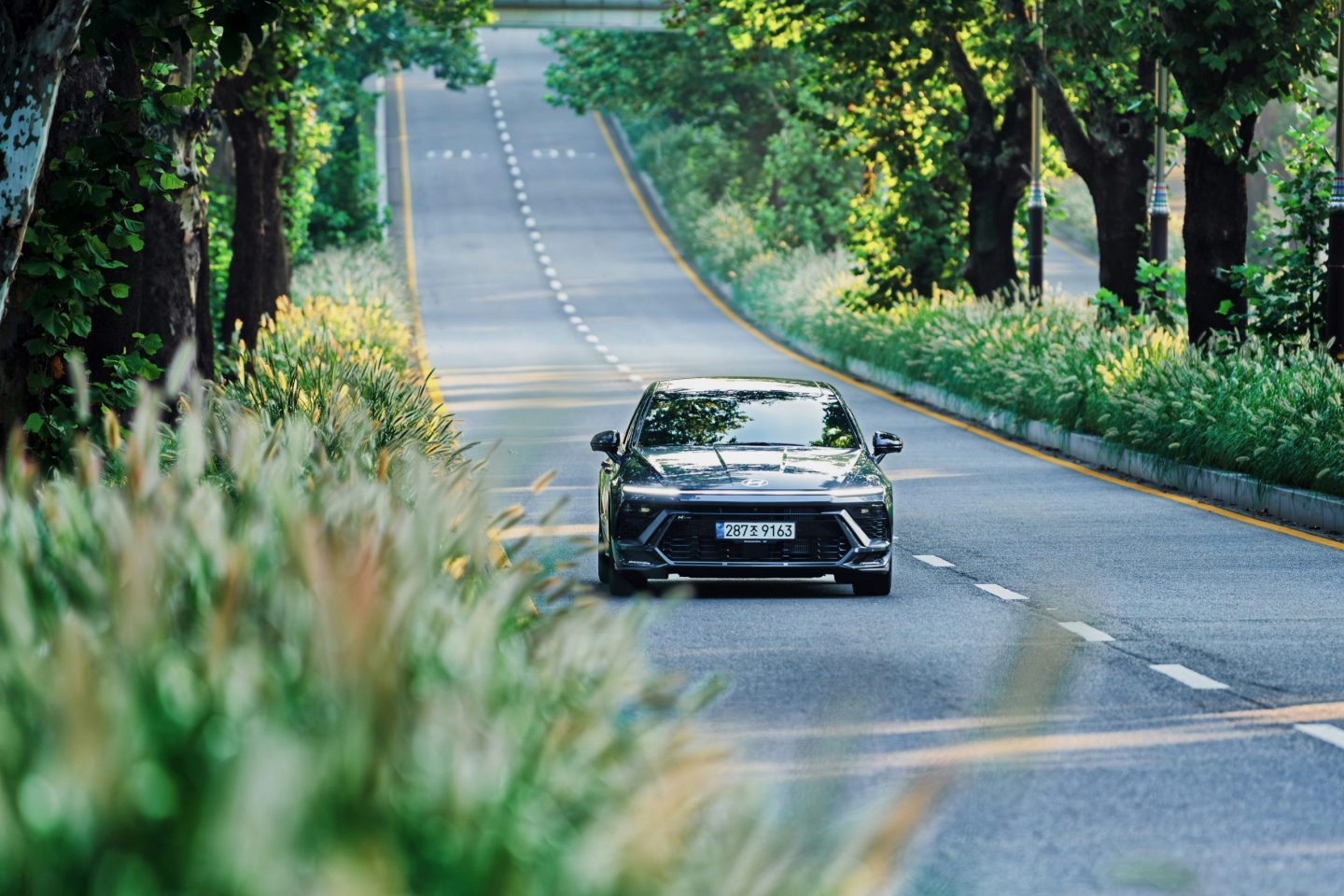
Kakao Mobility’s Vision for Level 4 Autonomous Driving
Kakao Mobility has announced a detailed roadmap to advance Level 4 autonomous driving technology as part of its broader physical AI strategy. The announcement was made by Kim Jin-kyu, vice president and head of the Physical AI division, during the 2026 World IT Show held at COEX in Seoul.
The session, themed “Beyond Idea, Into Action: AI moves Reality,” brought together 460 companies and organizations from 17 countries, highlighting a global shift towards integrating AI within physical industrial sectors. South Korea’s Ministry of Science and ICT positioned this event within the wider transition towards physical AI applications.
Focus on In-House Development and Physical Infrastructure
Kakao Mobility is emphasizing the development of autonomous driving systems in-house, aiming to fuse these technologies with physical infrastructure to enhance urban mobility across South Korea. The company seeks to establish an open autonomous driving ecosystem to foster local innovation and competitiveness.
Understanding Level 4 Autonomy
Level 4 autonomy denotes vehicles capable of performing all driving tasks within specific service areas without passenger intervention, as defined by the US National Highway Traffic Safety Administration. These vehicles operate in controlled environments such as autonomous taxi zones or designated districts.
Core Technology Pillars
The roadmap focuses on three primary technical domains:
- Machine Learning Models: Designed to perform perception, decision-making, and vehicle control autonomously, these models enable the vehicle to interpret surroundings, make driving decisions, and control movement without human input.
- Vehicle Redundancy: The adoption of redundant system architectures ensures that critical vehicle functions remain operational even if key components fail, enhancing safety and reliability.
- Validation Systems: Combining virtual simulations with real-world driving data, this platform supports rigorous testing, performance optimization, and quality assurance for autonomous services.
Safety and Control Innovations
Kakao Mobility is developing an integrated safety management platform that includes the Autonomous Vehicle Visualizer, a 3D tool providing real-time visualization of the vehicle’s field of view to passengers. This transparency helps passengers understand the vehicle’s perception and context during rides.
Further plans include establishing a 24-hour control center and implementing an anomaly detection system leveraging vision-language AI models. These systems aim to facilitate real-time situation analysis, enable remote intervention, and ensure prompt emergency responses.
Promoting an Open Autonomous Driving Ecosystem
To encourage industry-wide innovation, Kakao Mobility intends to share key technological assets with partners such as startups, manufacturers, and other companies involved in autonomous driving. Shared resources will include large-scale autonomous driving datasets, high-definition maps critical for localization and decision-making, and APIs for ride-hailing and dispatch services.
This collaborative approach is designed to reduce barriers for companies entering the autonomous vehicle space by providing infrastructure components and operational resources like fleet management and on-site support.
Real-World Application: Seoul’s Gangnam Autonomous Taxi Service
As a practical demonstration of its technology, Kakao Mobility operates a late-night autonomous taxi service in Seoul’s Gangnam district via its Kakao T platform. Since its launch in September 2024 until February 2026, the service completed 7,754 rides with no reported accidents linked to autonomous driving.
The service transitioned from a free pilot to a paid model in April 2026, concurrently expanding its fleet from three to seven vehicles. Users can request rides through Kakao T, which integrates multiple mobility options including taxis and navigation services.
Conclusion
Kakao Mobility’s Level 4 autonomous driving roadmap reflects a strategic push to integrate advanced AI technologies with physical infrastructure, fostering a safer, more efficient mobility ecosystem in South Korea. By promoting openness and collaboration, the company aims to position itself as a leader in the rapidly evolving autonomous vehicle industry.
Fonte: ver artigo original

Related Articles
 Rapid Expansion of Microsoft Data Centers Poses Challenges to Sustainability Ambitions
 Memorable Robots at CES Offer a Glimpse into the Future of AI Innovation
 OpenAI Launches ChatGPT Group Chats to Enhance AI Collaboration in Teams
 Family Offices Embrace AI for Enhanced Financial Data Analysis, Ocorian Study Finds