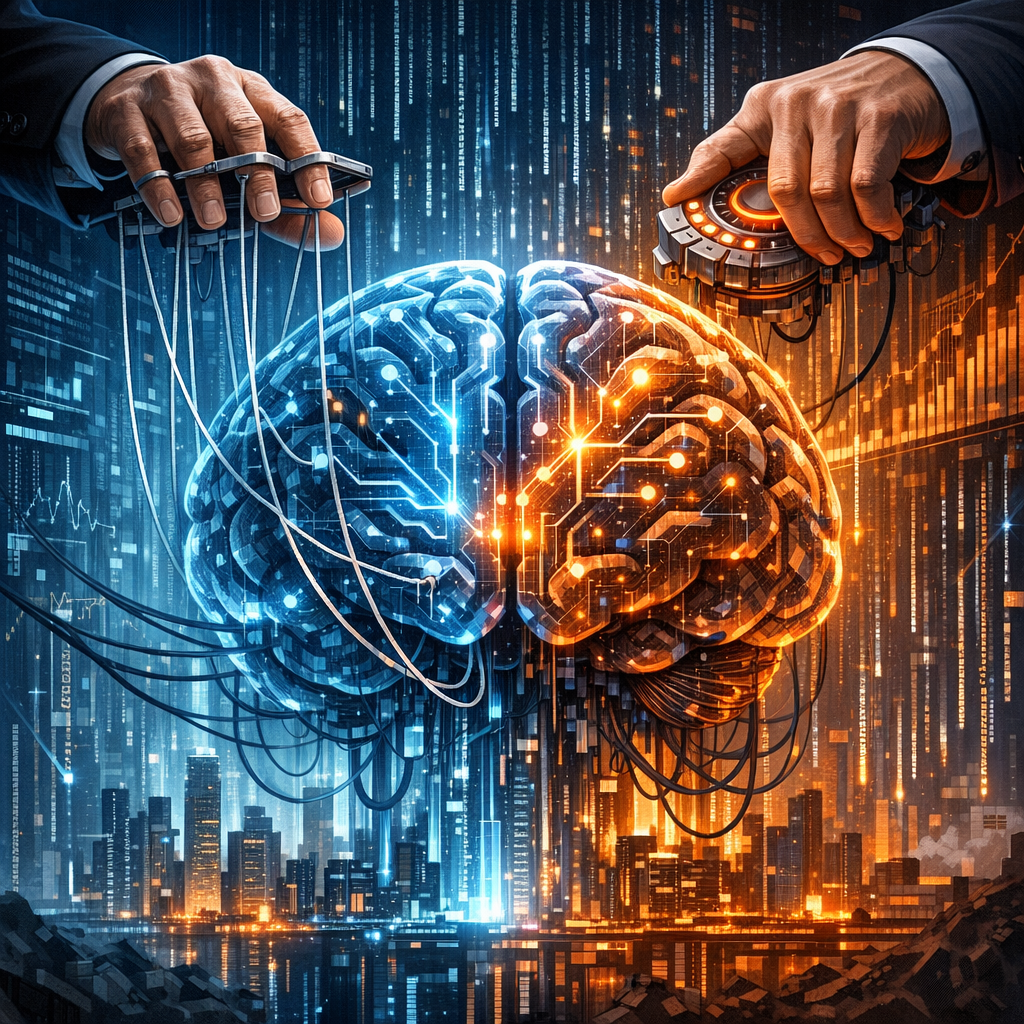
Why Concentrated AI Power Is a Threat to Innovation
Artificial intelligence promised a future of boundless innovation and societal benefit, yet the reality unfolding today tells a different story. A handful of powerful CEOs and corporations dominate the AI landscape, turning what should be a collaborative and open field into a closed ecosystem governed by their interests. Is this concentration of power accelerating progress—or throttling it?
The Myth of Benevolent AI Giants
We tend to assume that the leaders of AI companies have humanity’s best interests at heart. Yet, when companies prioritize profit, control, and market dominance, ethics often become a branding strategy rather than a genuine commitment. Are these tech titans shaping AI for the common good, or merely crafting narratives to mask their monopolistic ambitions?
Sam Altman and Jensen Huang: Power Players or Gatekeepers?
Consider the influence of figures like Sam Altman and Jensen Huang. Altman’s OpenAI touts openness but increasingly wields power behind closed doors, while Huang’s Nvidia controls critical AI hardware essential to progress. Their control extends beyond innovation—they are gatekeepers deciding who benefits from AI advancements and who is left behind.
The Crisis of AI Leadership and Its Societal Impact
This concentration of power leads to a leadership crisis in AI. When a few entities control the technology, they also steer the ethical frameworks, regulatory discussions, and public narratives. This raises uncomfortable questions: Can democracy influence AI’s trajectory, or have corporations already rewritten society’s rules?
Is Open Source AI The Last Bastion of Innovation?
Closed AI models dominate because they protect corporate interests, yet this stifles collaborative development. Open source AI, often underfunded and overlooked, remains the last line of defense for innovation and transparency. But will it survive against overwhelming corporate muscle?
AI Safety vs. Profit: An Unresolved Battle
Big Tech’s commitment to AI safety is often a veneer masking the relentless pursuit of profits and market control. How can society trust companies whose bottom line conflicts with cautious, ethical AI deployment? The AI safety debate is less about genuine risk mitigation and more about managing public perception and regulatory pressures.
Looking Forward: Can AI Leadership Evolve?
We stand at a crossroads: continue down the path of concentrated AI power with its associated risks, or push for democratized, transparent AI development that serves society broadly. But who will lead this change? If current CEOs are more invested in control than collaboration, we may need new leaders—ethical, accountable, and visionary—to steer AI towards its true potential.
Ultimately, the AI leadership crisis is not just a corporate issue; it is a societal challenge demanding urgent attention. Ignoring it risks locking humanity into a future where innovation is stifled, ethics are compromised, and AI serves power rather than people.

Related Articles
 Why NVIDIA’s AI Monopoly Threatens Innovation and Democratic Control
 Unlock Effortless Corporate Video Production with Synthesia’s AI-Powered Avatars
 How Sam Altman’s Quiet Power Shift Is Reshaping the AI Industry and Global Governance
 TU Darmstadt Researchers Propose VOIX Framework to Enhance AI Interaction with Websites