Amazon Web Services (AWS) introduced Kiro powers on Wednesday, a novel system designed to provide AI coding assistants with immediate, specialized knowledge tailored to particular tools and workflows. Announced at AWS’s annual re:Invent conference in Las Vegas, Kiro powers tackles a key limitation in how AI agents operate by activating relevant expertise only when needed, rather than preloading all capabilities.
Addressing the Bottleneck in AI Coding Assistants
Traditional AI coding tools tend to load extensive capabilities into memory upfront, which consumes significant computational resources and can overwhelm AI with irrelevant information. This often leads to slow responses, degraded output quality, and higher operational costs due to excessive token usage.
Deepak Singh, Vice President of Developer Agents and Experiences at Amazon, explained in an interview that the goal of Kiro powers is to provide AI agents with specialized context to reach correct outcomes faster while reducing costs.
Partnering with Key Technology Providers
The launch involves collaborations with nine technology companies, including Stripe, Figma, Datadog, Supabase, and AWS’s own services. Developers also have the ability to create and share their own customized powers with the community.
Why AI Coding Assistants Struggle with Multiple Tool Integrations
Modern AI coding assistants rely on the Model Context Protocol (MCP) to connect with external services. When multiple MCP servers are connected—for example, for Stripe payments, Figma design, and Supabase databases—dozens of tool definitions are loaded into the AI’s working memory before any coding begins.
AWS documentation notes that connecting five MCP servers can consume over 50,000 tokens, approximately 40% of a model’s context window, before the developer issues a single request. This inefficiency, known in the industry as “context rot,” slows down AI response times, reduces output quality, and increases costs as AI platforms charge by token usage.
How Kiro Powers Offers On-Demand AI Expertise
Kiro powers address this challenge by bundling three key components into a dynamically loaded package:
- POWER.md: A steering file that acts as an onboarding guide, instructing the AI on available tools and when to activate them.
- MCP Server Configuration: The actual connection settings to external services.
- Optional Hooks and Automation: Scripts that trigger specific actions automatically.
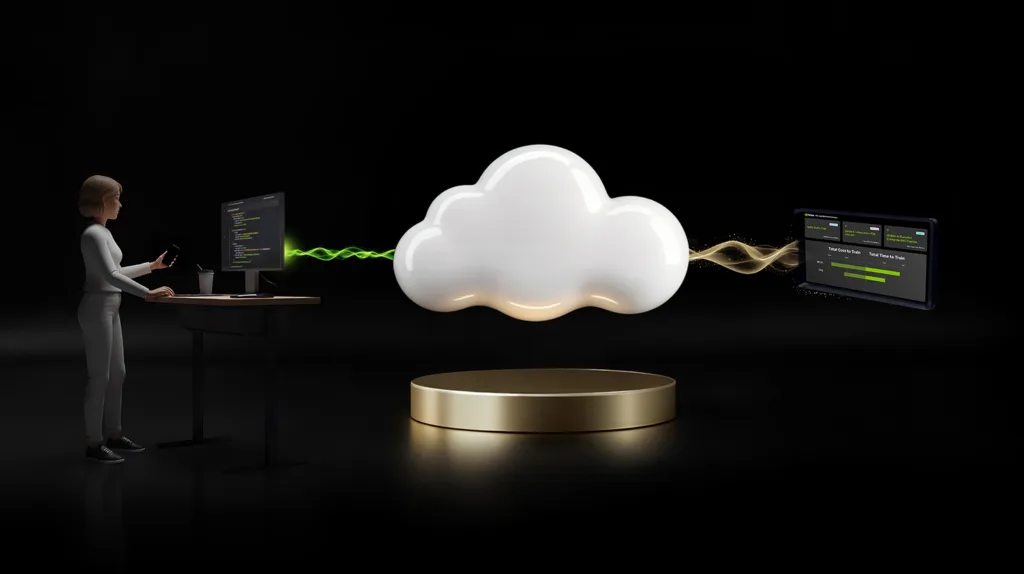
For example, when a developer mentions terms like “payment” or “checkout,” Kiro automatically loads the Stripe power, injecting relevant tools and best practices into the AI’s context. When the focus switches to database tasks, Supabase activates while Stripe deactivates, keeping the baseline context usage near zero when no powers are active.
Singh highlighted the user-friendly experience: “You click a button and it automatically loads. Once a power has been created, developers just select ‘open in Kiro’ and it launches the IDE with everything ready to go.”
Democratizing Advanced Developer Practices
Before Kiro powers, configuring AI agents with specialized context required sophisticated knowledge, including writing custom steering files and managing tool activations manually. Singh emphasized that this new system democratizes these advanced techniques, enabling any developer to leverage optimized AI workflows.
He noted, “We’ve found that our developers were adding capabilities to make their agents more specialized. They wanted the agent to become experts at specific problems, such as backend as a service for front end developers. Kiro powers formalizes this approach so everyone can benefit.”
Dynamic Loading Versus Fine-Tuning
Kiro powers also presents a cost-effective alternative to fine-tuning AI models, which involves retraining on specialized data to enhance performance. Singh explained that fine-tuning is expensive and not feasible for most leading AI models, which are typically closed-source and cannot be modified directly.
Instead, Kiro powers dynamically load the appropriate expertise only when needed, reducing ongoing token costs since developers do not pay for inactive tools.
Positioning Within AWS’s Autonomous AI Strategy
Kiro powers is part of AWS’s broader initiative into “agentic AI,” which focuses on AI systems capable of operating autonomously over extended periods. At re:Invent, AWS also unveiled frontier agents designed for long-duration autonomous tasks, such as the Kiro autonomous software development agent, the AWS security agent, and the AWS DevOps agent.
While frontier agents address complex, multi-day projects requiring autonomous decision-making, Kiro powers provide precise, efficient tools for routine development tasks where speed and resource efficiency are critical.
The Future of AI-Assisted Software Development
The launch of Kiro powers signals a maturing market for AI development tools. Since Microsoft introduced GitHub Copilot in 2021, numerous AI coding assistants have emerged, increasing both capabilities and complexity.
The Model Context Protocol, open-sourced by Anthropic last year, standardized connections between AI agents and external services but created new challenges related to context overload that Kiro powers now resolve.
Singh pointed out that AWS’s extensive experience running cloud infrastructure and managing large-scale software development provides unique insights into creating practical AI tools for production applications.
Plans for Cross-Platform Compatibility
Currently, Kiro powers operate exclusively within the Kiro IDE. However, AWS is working toward compatibility with other AI development environments, including command-line interfaces, Cursor, Cline, and Claude Code. The vision is to allow developers to “build a power once, use it anywhere,” although this remains a future goal.
Technology partners benefit by creating a single power that integrates across multiple AI tools, enhancing efficiency as AI-assisted development becomes more prevalent.
Kiro powers are now available for developers using Kiro IDE version 0.7 or later, included at no extra cost beyond the standard subscription.
Ultimately, AWS bets that the future winners in AI-assisted coding will be tools that intelligently manage relevant knowledge rather than attempting to do everything simultaneously.
Fonte: ver artigo original

Related Articles
 AI Awards 2026 Opens Global Call for Entries to Celebrate AI Innovations
 Google DeepMind Elevates Interactions API as Core Interface for Gemini Models
 Microsoft, NVIDIA, and Anthropic Establish Strategic AI Compute Alliance to Transform Cloud Infrastructure
 Larry Summers Resigns from OpenAI Board Following Epstein Connection Revelations