Boris Cherny, the mind behind Claude Code, the world’s most advanced AI coding assistant developed at Anthropic, has recently revealed his unique workflow that is captivating the software engineering community worldwide. What started as a simple explanation of his terminal setup quickly evolved into a viral discussion, highlighting a potential paradigm shift in how software is developed using artificial intelligence.
Managing Multiple AI Agents Simultaneously: A New Development Paradigm
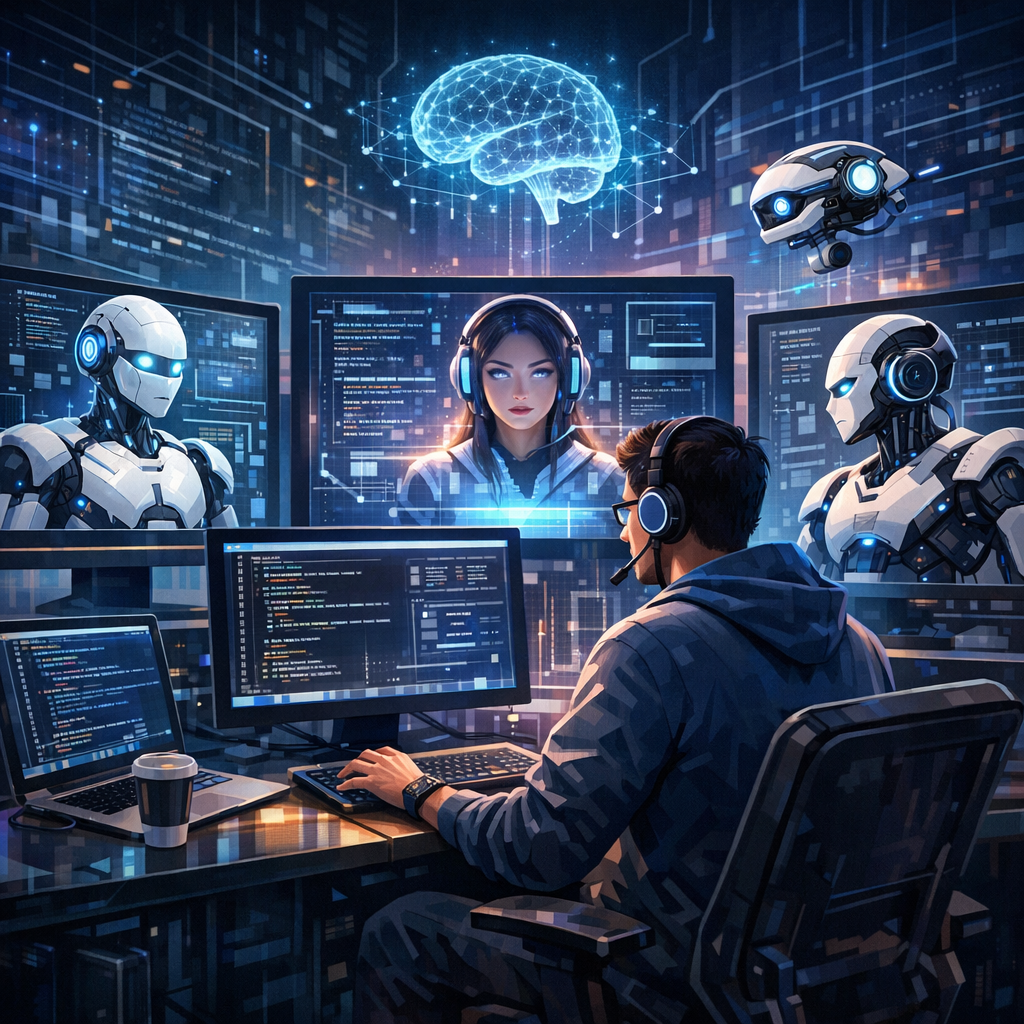
Contrary to the traditional linear coding approach where developers write, test, and iterate sequentially, Cherny operates like a commander managing a fleet of AI agents. He simultaneously runs five instances of the Claude AI model in parallel within his terminal, each assigned to different tasks such as running test suites, refactoring legacy code, or drafting documentation.
By leveraging system notifications through tools like iTerm2, Cherny efficiently monitors these concurrent workflows, allowing him to act only when an AI agent requires input. Additionally, he manages several more AI sessions through a browser interface, seamlessly transferring work between local and online environments via a teleport command. This multitasking approach validates Anthropic’s strategic focus on achieving higher productivity through smarter orchestration of AI models rather than purely expanding computational infrastructure.
Why Choosing a Slower, Smarter AI Model Pays Off
In an industry heavily focused on speed, Cherny’s choice to use Anthropic’s most powerful and slowest model, Opus 4.5, is counterintuitive yet insightful. Despite its slower response time compared to lighter models, Opus 4.5 requires less human correction due to its superior understanding and tool utilization capabilities.
This insight is significant for enterprise leaders: the real bottleneck in AI-assisted coding is not generation speed but the human effort spent fixing AI errors. Investing in a more intelligent model upfront reduces the time-consuming correction process later, effectively increasing overall development efficiency.
Continuous Learning via a Shared Error Log
One major challenge with AI coding assistants is their lack of memory between sessions, often referred to as AI amnesia. Cherny’s team overcomes this by maintaining a dedicated file named CLAUDE.md within their git repository. Every time an error or undesirable behavior is detected in Claude’s output, it is documented in this file.
This practice transforms the codebase into a self-improving system. When developers correct errors, they simultaneously update Claude’s instructions, ensuring the AI learns from its mistakes permanently. Over time, this feedback loop makes the AI agent increasingly reliable and aligned with the team’s coding conventions.
Automating Tedious Tasks with Slash Commands and Subagents
Cherny’s workflow also emphasizes automation of repetitive development tasks. He employs custom slash commands integrated into the project repository to trigger complex operations with simple keystrokes. For example, the /commit-push-pr command automates the entire git workflow — committing changes, pushing them to the repository, and opening pull requests — greatly reducing manual effort.
Furthermore, Cherny utilizes specialized AI personas, or subagents, dedicated to specific development phases such as code simplification and end-to-end application verification. These subagents enhance code quality and ensure thorough testing before deployment.
The Power of Verification Loops in AI-Generated Code
A defining feature of Claude Code’s success is its built-in verification loop. Unlike typical AI text generators, Claude actively tests every code change it produces. Cherny describes how the AI uses browser automation and test suites to validate user interfaces and functionality, iterating until the code not only works but also delivers a good user experience.
This self-testing capability significantly improves output quality by two to three times, as the AI not only writes but also confirms the correctness of its code autonomously. This represents a critical advancement in AI-assisted software engineering.
Implications for the Future of Software Engineering
The enthusiastic response to Cherny’s shared workflow indicates a major shift in developers’ perspectives on AI in coding. What was once regarded as a simple autocomplete tool has evolved into a comprehensive operating system for software development labor.
As Jeff Tang, a respected developer voice, summarized, embracing AI as a workforce rather than an assistant can multiply human productivity fivefold. Early adopters of this mindset and workflow will not only outperform their peers but also transform the very nature of programming, moving from manual typing to commanding intelligent autonomous agents.
This breakthrough signals a future where human developers orchestrate AI teams, fundamentally reshaping how software products are built and delivered.
Fonte: ver artigo original

 OpenEvidence Reaches $12 Billion Valuation Amidst Growing AI Competition
 JustiGuide Leverages AI to Simplify Navigation of the U.S. Immigration System
 Meta Expands Solar Power Capacity by 650 MW to Support AI Infrastructure
 Microsoft Advances AI Autonomy with Launch of New MAI Models