Supreme Court Sidesteps Key AI Copyright Dispute
As generative artificial intelligence technologies advance rapidly, they are reshaping creative industries by independently producing images, texts, and music. This evolution has ignited global discussions about intellectual property rights—specifically, whether AI-generated works qualify for copyright protection and who holds ownership.
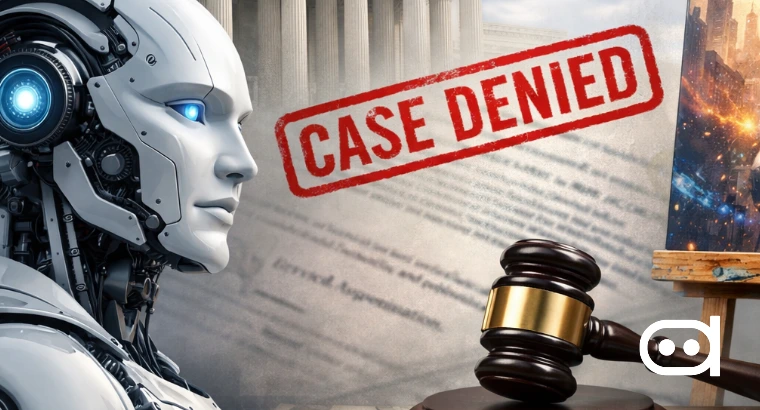
Recently, the U.S. Supreme Court declined to hear a case that could have provided definitive guidance on these issues. The case centers around artwork created by an AI system developed by Stephen Thaler, which sparked a landmark debate over authorship and copyright eligibility.
The Background of the Dispute
Stephen Thaler’s AI, known for generating original artworks, became the subject of a legal challenge questioning if creations by non-human entities can be copyrighted. The case sought to clarify whether AI-generated content could be legally protected and, if so, who the rightful owner would be—the AI developer, user, or the machine itself.
This legal uncertainty has widespread implications for artists, companies, and developers utilizing AI tools like ChatGPT, Gemini, and others that autonomously generate diverse creative outputs.
Implications of the Supreme Court’s Decision
By declining to hear the case, the Supreme Court has left lower court rulings and the current legal ambiguity intact. This means that, for now, AI-generated works generally cannot claim copyright protections under existing laws, as copyright traditionally requires human authorship.
Experts suggest this decision delays establishing a clear legal framework, forcing creators and businesses to navigate a complex and unsettled intellectual property landscape. It raises concerns about protecting investments in AI-generated content and how copyright law should evolve alongside technology.
The Broader Context of AI and Copyright
Globally, governments and legal bodies are grappling with how to adapt copyright statutes to the realities of AI-generated creations. The rise of AI tools capable of producing art, literature, and music independently challenges traditional notions of creativity and ownership.
In the absence of definitive legal rulings, companies are experimenting with internal policies and contractual agreements to manage rights over AI outputs. Meanwhile, the debate continues among policymakers, legal professionals, and the creative community about the future of intellectual property in the AI era.
Looking Ahead
As AI technologies continue to permeate everyday life and professional workspaces, the urgency for updated legal frameworks intensifies. The Supreme Court’s refusal to engage in this case signals that resolution may come from legislative reforms or future judicial reviews rather than immediate judicial intervention.
Stakeholders across industries must stay informed and proactive in shaping policies that balance innovation, creators’ rights, and public interest in this rapidly evolving domain.
Fonte: ver artigo original

Related Articles
 Andrej Karpathy Calls for Schools to End Policing AI-Generated Homework
 AI Streamlines HR Compliance, Yet UK Tech Firms Struggle with Sponsor Licence Automation
 Anthropic Co-Founder Warns Recursive AI Could Surpass Human Oversight by 2028
 Traders Fair Manila 2026 to Unite Global Trading Leaders and Innovators Amid Rapid Financial Market Evolution