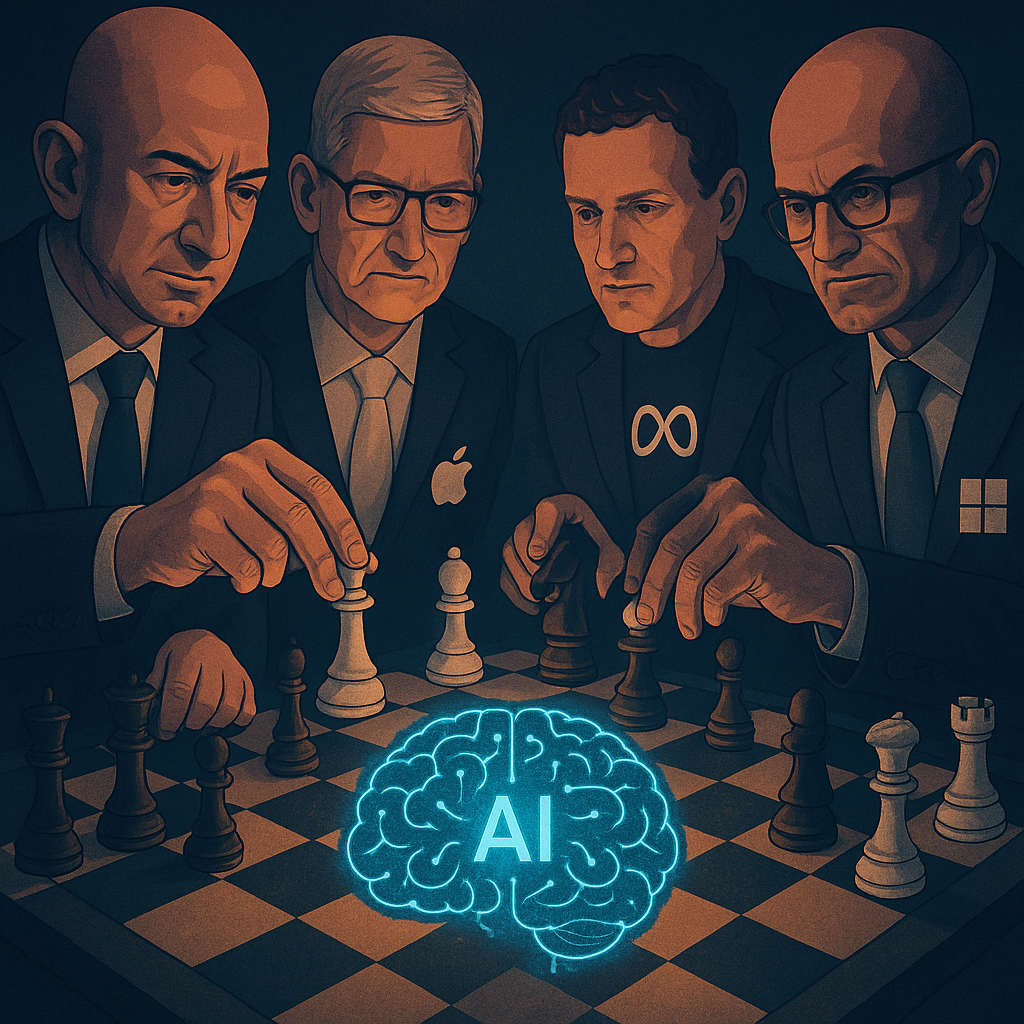
Introduction: The Power Game Behind AI Leadership
Artificial intelligence promises a future of unprecedented innovation, automation, and societal transformation. But behind the glossy PR and visionary speeches, a silent war is raging among the CEOs of the biggest tech companies. Are they truly pioneering the next frontier for humanity, or merely fighting for control over data, models, and infrastructure? This article challenges the widely held belief that AI progress is driven by pure innovation and asks: what if the real currency is power?
AI CEOs: Innovators or Power Brokers?
Names like Sam Altman, Jensen Huang, Sundar Pichai, and Mark Zuckerberg dominate headlines. They are portrayed as brilliant visionaries steering us toward artificial general intelligence (AGI) and revolutionary breakthroughs. Yet, their strategies often reveal a different agenda—one focused on market dominance, exclusive ecosystems, and controlling the narrative around AI development.
Consolidation over Collaboration
Despite the rhetoric of openness and responsible AI, these leaders funnel vast resources into creating proprietary models and infrastructure. Open-source initiatives and smaller startups struggle to compete against this juggernaut. Is this fostering true innovation, or simply erecting barriers to entry that protect entrenched interests?
The Data Monopoly
Data is the new oil, and the biggest tech firms have unparalleled access to it. Their control over big data and cloud computing infrastructures accelerates AI capabilities—but also centralizes power. This raises ethical and societal questions: who owns the data powering these models? How transparent are these systems? And what about privacy?
Power vs. Innovation: The Ethical Dilemma
The pursuit of dominance raises critical ethical issues. When CEOs prioritize control, do they undermine the foundational values of AI ethics like fairness, transparency, and accountability? The race for better GPUs and specialized chips, often spearheaded by companies like NVIDIA, is not just about performance—it’s about securing a technological stranglehold.
Regulation as Theater
Governments struggle to keep pace, resulting in superficial regulations that do little more than act as PR shields for these tech giants. Meanwhile, the real power players continue to shape the AI landscape with minimal oversight, increasing risks related to bias, misinformation, and societal manipulation.
What Does This Mean for Society and the Future of Work?
As AI-driven automation reshapes industries, the imbalance of power among these tech CEOs translates directly into who wins and who loses in the labor market and digital economy. The increasing automation threatens jobs, yet the benefits accrue to a small elite controlling the AI stack. Without accountability, this could deepen digital inequality and erode public trust.
Conclusion: Questioning the Narrative
We must ask ourselves: Are the CEOs leading the AI revolution genuinely advancing humanity, or are we witnessing a high-stakes power struggle cloaked in the language of innovation? The future of AI—and society—depends on recognizing these uncomfortable truths and demanding transparency, ethical stewardship, and fair access to AI technologies.
Innovation without accountability risks becoming innovation for the few, not the many. As consumers, policymakers, and technologists, challenging the narratives around AI leadership is not just necessary—it’s imperative.

Related Articles
 A Era do Emprego Está a Acabar? Como a Automação e a IA Redefinem o Futuro do Trabalho
 China Introduces Regulations on Emotional AI Chatbots Amid Mental Health Concerns
 Why OpenAI’s Mission and Business Model Are on a Collision Course: The Trust Dilemma in AI Power
 Why Jensen Huang and NVIDIA Are Shaping the Future of AI Monopoly and Innovation