Google Introduces Nested Learning to Revolutionize AI Memory and Adaptability
In a significant advancement for artificial intelligence, Google researchers have developed a new learning paradigm named Nested Learning aimed at resolving a key limitation in current large language models (LLMs): their inability to update or expand knowledge post-training. This approach conceptualizes model training as a hierarchy of nested optimization problems, enabling AI systems to learn and adapt across multiple time scales.
Challenges with Current Large Language Models
Modern LLMs, powered by transformer architectures, have transformed AI capabilities by generalizing across diverse tasks and exhibiting emergent skills. However, these models remain essentially static once training concludes, lacking mechanisms to incorporate new information or skills from ongoing interactions. Their learning is confined to pre-training data, with only short-term adaptability through in-context learning — a transient memory limited to the current prompt context.
This limitation means that, analogous to a person unable to form new long-term memories, LLMs forget information once it surpasses the context window. The absence of “online” consolidation prevents the model’s core parameters from updating dynamically, curtailing continual learning and real-time knowledge acquisition.
Nested Learning: A Multi-Level Approach
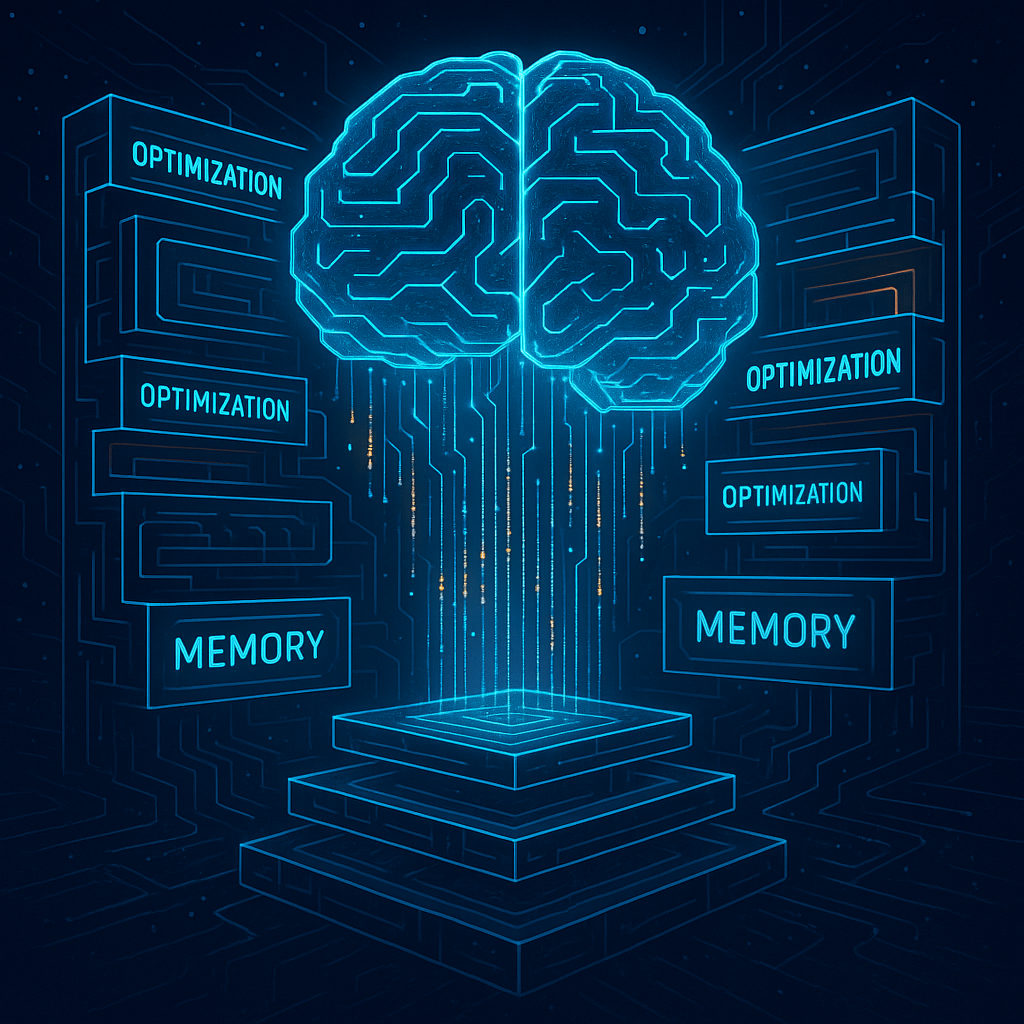
Nested Learning reconceptualizes AI training by treating a model as a system of interconnected learning processes operating at various abstraction levels and update frequencies. Rather than separating architecture design from optimization, this paradigm integrates them, facilitating the development of an “associative memory” capable of linking and recalling related information efficiently.
Key components, such as attention mechanisms in transformers, are reframed as associative memory modules. By assigning distinct update rates to different components, Nested Learning organizes optimization tasks into hierarchical levels, enabling models to learn and retain information over diverse time horizons.
Hope Model Demonstrates Promising Results
To validate Nested Learning, Google introduced Hope, a self-modifying architecture enhanced with a “Continuum Memory System” (CMS). Hope builds upon Google’s earlier Titans architecture, expanding memory update speeds from two levels to theoretically infinite tiers. The CMS comprises multiple memory banks updating at varying frequencies—fast for immediate data and slow for abstracted, long-term consolidation.
Experimental evaluations reveal that Hope surpasses traditional transformers and contemporary recurrent models in language modeling, continual learning, and long-context reasoning tasks. Notably, it exhibits lower perplexity scores and higher accuracy, excelling in “Needle-In-Haystack” challenges that demand retrieval of specific information embedded in large text corpora. These findings suggest that Hope’s CMS framework significantly enhances the handling of extended context sequences.
Context Within AI Research and Future Implications
Nested Learning aligns with broader efforts to develop AI systems capable of hierarchical information processing. Similar initiatives include Sapient Intelligence’s Hierarchical Reasoning Model (HRM) and Samsung’s Tiny Reasoning Model (TRM), which focus on architectural innovations to improve reasoning efficiency and scalability.
Despite its potential, Nested Learning faces practical hurdles, notably the need for hardware and software ecosystems optimized beyond current deep learning and transformer-centric frameworks. Transitioning to this paradigm may demand substantial infrastructural adaptations. Nonetheless, if widely adopted, Nested Learning could enable more efficient, continually learning LLMs with profound implications for enterprise AI applications that require real-time adaptation to evolving data and user demands.
As AI increasingly integrates into dynamic environments, breakthroughs like Nested Learning represent critical steps toward overcoming the static nature of today’s models, fostering AI systems with memory and learning capabilities that mirror human cognition more closely.

Related Articles
 IBM Highlights the Critical Role of Robust AI Governance in Safeguarding Enterprise Margins
 Why NVIDIA’s AI Monopoly Threatens Innovation and Global AI Leadership
 Sam Altman and the New AI Power Elite: Who Really Controls the Future of Artificial Intelligence?
 OpenAI Launches Group Chats in ChatGPT to Enhance Team Collaboration and AI Integration in Daily Planning