What happened
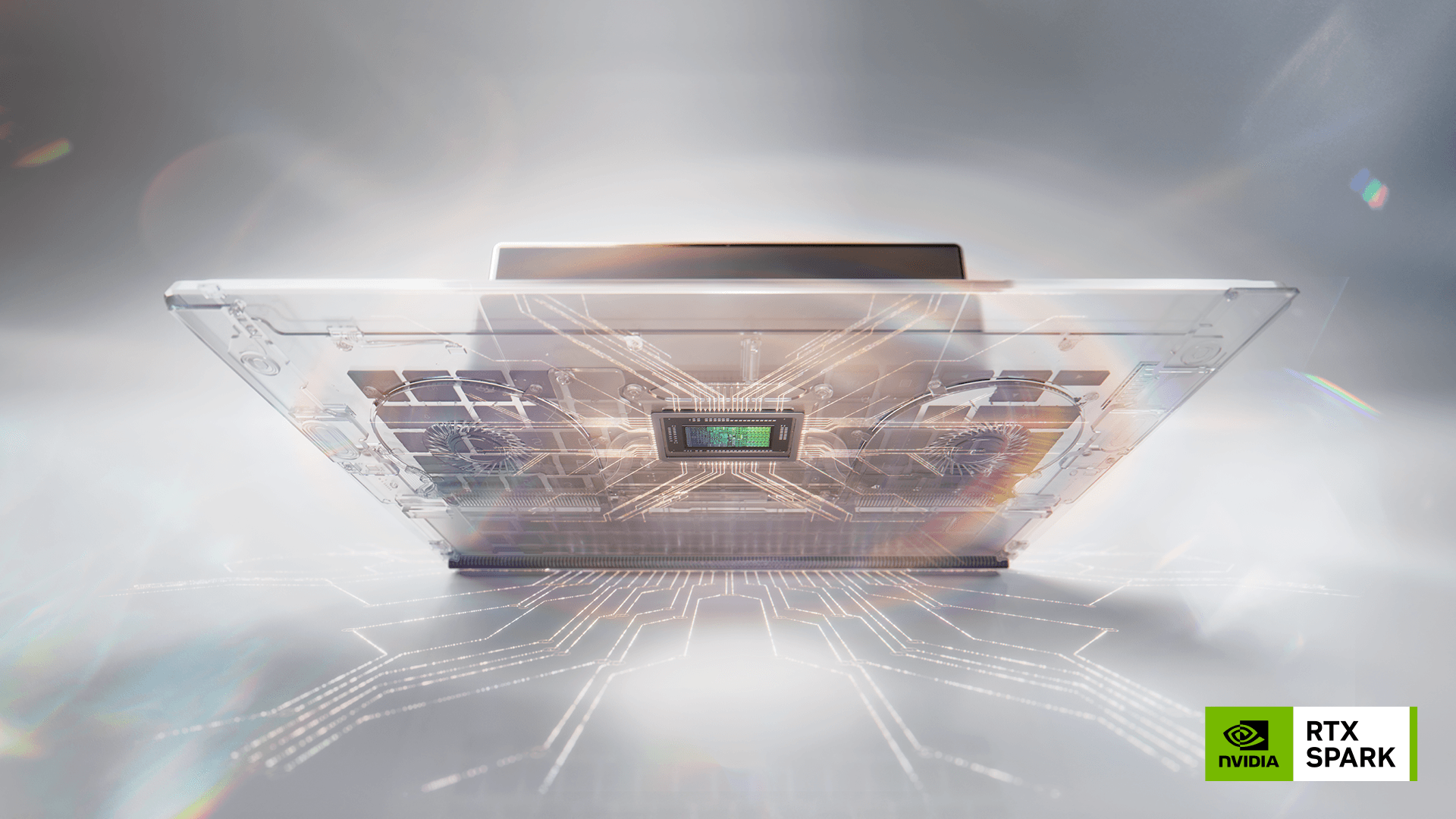
Nvidia Unveils RTX Spark Chip is at the center of this update. Nvidia introduces the RTX Spark, a powerful chip combining a Blackwell GPU and Arm-based Grace CPU, designed to enable practical local AI agents on Windows laptops. Major manufacturers plan to launch devices featuring this technology in late 2026.
Nvidia Launches RTX Spark to Challenge Apple Silicon and Qualcomm in AI-Powered Windows Laptops
Nvidia has announced the RTX Spark, a groundbreaking new chip aimed at making local AI agents truly practical on Windows devices. The RTX Spark integrates Nvidia’s Blackwell GPU architecture with an Arm-based Grace CPU, featuring up to 128 GB of shared memory and boasting a remarkable 1,000 TOPS (tera operations per second) in FP4 precision. This combination promises to deliver significant advances in AI processing capabilities directly on laptops, without reliance on cloud computing.
Technical Highlights and Industry Impact
The RTX Spark’s fusion of a high-performance GPU and CPU, alongside a massive shared memory pool, represents a strategic move by Nvidia to counter Apple Silicon and Qualcomm offerings within the Windows laptop ecosystem. The 1,000 TOPS FP4 computation capacity indicates substantial raw AI throughput, facilitating complex AI tasks such as running advanced local AI agents, machine learning models, and real-time data processing.
By enabling these capabilities locally, Nvidia aims to accelerate AI adoption on Windows devices, enhancing responsiveness, privacy, and offline functionality for users. This shift is particularly relevant as AI assistants and agents become increasingly integral to productivity and user experience.
Partnerships and Market Availability
<pLeading PC manufacturers including ASUS, Dell, HP, Lenovo, Microsoft Surface, and MSI have committed to incorporating the RTX Spark chip into their upcoming laptop models. These devices are expected to hit the market starting from the fall of 2026, marking a significant milestone in bringing advanced AI hardware to mainstream Windows users.
This development underscores Nvidia’s pivotal role in the AI hardware landscape, supplying critical infrastructure that empowers AI models such as ChatGPT, Claude, and Grok to operate more efficiently. The RTX Spark could help reduce dependency on cloud-based AI computations, giving users faster, more secure access to AI-driven features directly on their devices.
Context Within the AI Industry
Nvidia’s RTX Spark launch reflects the broader AI chip race, where companies compete to deliver superior hardware that supports next-generation AI applications. With OpenAI, Anthropic, xAI, and Google DeepMind pushing AI capabilities forward, the demand for specialized, high-performance AI chips continues to surge.
Moreover, RTX Spark’s integration of GPU and CPU architectures aligns with the growing trend of heterogeneous computing, optimizing AI workloads by leveraging the strengths of both processing units. This approach is expected to enhance the performance and efficiency of AI assistants and agents across various devices.
As AI becomes more embedded in daily computing, hardware innovations like Nvidia’s RTX Spark will play a crucial role in shaping the future of AI-assisted productivity and interaction on Windows platforms.
Fonte: ver artigo original
Related coverage: AI Chronicle analysis and updates.
Why it matters
This update influences the AI race across model providers, infrastructure leaders, and enterprise adoption decisions.

Related Articles
 Microsoft Restructures AI Division to Pursue Superintelligence Amid Changing Industry Views
 New Study Reveals AI Models Struggle in Robot Control Without Human-Designed Frameworks, But Innovative Techniques Narrow the Gap
 Waymo Secures Regulatory Approval for Full Autonomous Driving Across Bay Area and Southern California
 Gridcare Uncovers Over 100 GW of Hidden Data Center Capacity Using AI-Powered Grid Analytics