
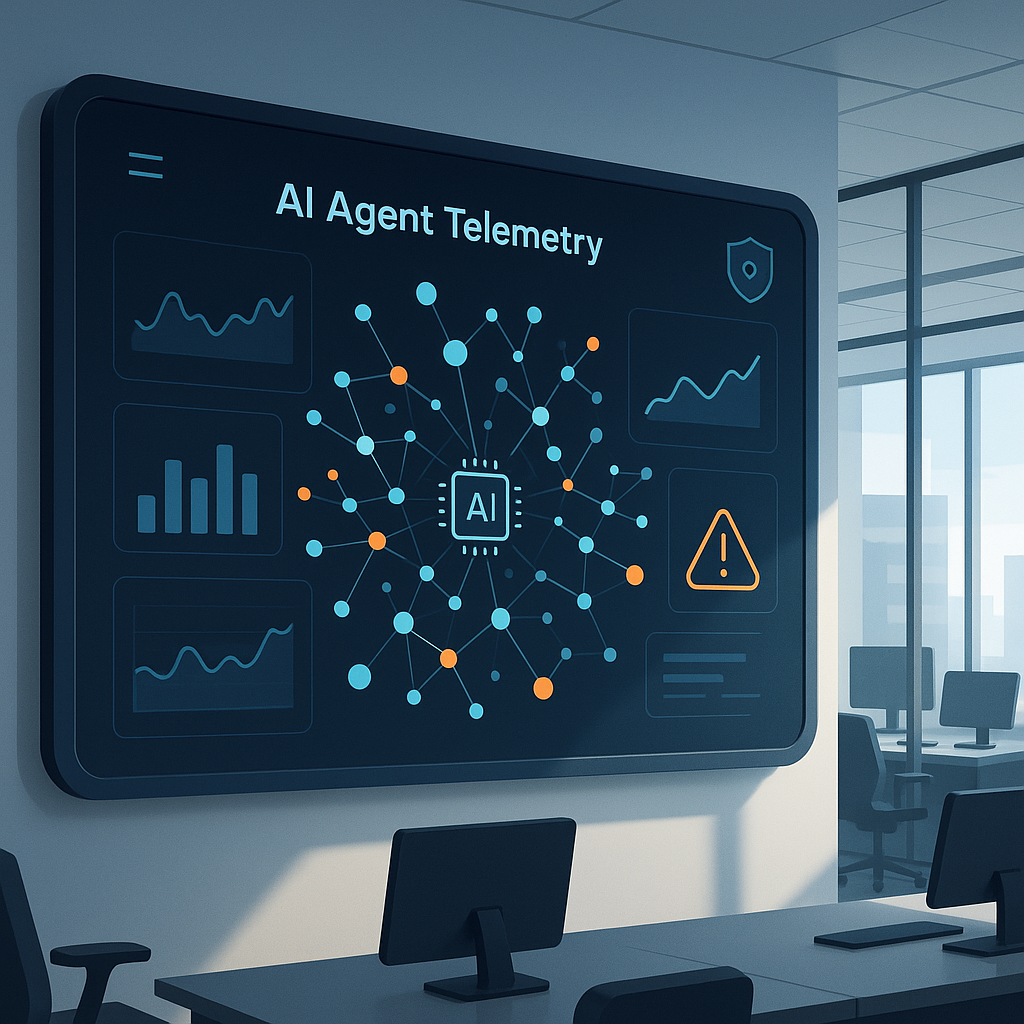
Managing AI systems remains a significant challenge for many enterprises, especially as the rapid proliferation of AI agents introduces potential security risks and operational complexities. Addressing this, Microsoft introduced Agent 365 during its annual Ignite conference, positioning it as a comprehensive control plane designed to bring enterprise-grade infrastructure and oversight to AI agents.
Agent 365: A Unified Control Plane for AI Agents
Agent 365 is designed to act as an observability layer that supports AI agents regardless of their origin, whether developed on Microsoft platforms or by third parties such as Adobe, Databricks, Cognition, and ServiceNow. The platform offers unified observability through telemetry data, customizable dashboards, and real-time alerts, enabling organizations to monitor every agent actively in use.
Charles Lamanna, Microsoft’s president of business apps and agents, emphasized that Agent 365 marks a pivotal shift from isolated AI experiments to a system where agents operate as part of a governed, secure, and productive enterprise ecosystem.
Core Capabilities for Enterprise Readiness
The platform delivers five key functionalities essential for managing AI agents at scale:
- Registry (Entra): Serves as the single source of truth by logging all agents across the enterprise, accessible to IT, developers, security teams, and business leaders.
- Access Control: Assigns unique agent IDs to enforce access policies, allowing administrators to restrict or block agents that do not comply with organizational requirements.
- Visualization: Provides a visual dashboard displaying agent connectivity, performance metrics, and adherence to assigned tasks.
- Interoperability: Supports integration with agents from various platforms and vendors, ensuring seamless operation within existing workflows.
- Security: Implements governance frameworks that safeguard enterprise systems from risks posed by agentic sprawl.
Addressing Agent Sprawl with Integrated Observability
Agent sprawl, where numerous AI agents operate across different departments without centralized oversight, exposes enterprises to vulnerabilities and inefficiencies. Microsoft’s Agent 365 consolidates what is typically a fragmented collection of tools into a singular, cohesive control plane. This approach simplifies management by treating AI agents as integral components of the enterprise technology stack, offering unified monitoring and governance.
Currently, companies like DataDog, Dynatrace, and Splunk provide observability services focused on AI systems, while startups such as Chronosphere and Raindrop have introduced specialized observability and debugging tools. Google has also entered this space with an observability dashboard within its AI Agent Builder. However, Microsoft’s strategy stands out by embedding these capabilities natively within the widely adopted Microsoft 365 environment, including integration with Copilot and Teams.
Strategic Implications for Enterprise AI
As organizations increasingly deploy diverse AI agents, the need to manage these entities responsibly and at scale becomes critical. Lamanna highlights that the optimal strategy is to govern AI agents as one would manage personnel—leveraging existing enterprise infrastructure, applications, and security measures to maintain trust and ensure productivity.
By delivering Agent 365, Microsoft aims to empower enterprises to securely scale AI adoption, prevent unmanaged agent proliferation, and maintain operational control in an evolving AI landscape.

Related Articles
 Meta Expands Solar Power Capacity to Support New AI Data Center in South Carolina
 U.S. Supreme Court Declines to Hear Pivotal AI-Generated Art Copyright Case
 Microsoft Enhances Cloud Services to Accelerate Indonesia’s AI Development
 Arm’s Vision for AI at the Edge: Shaping the Future of Intelligent Devices



