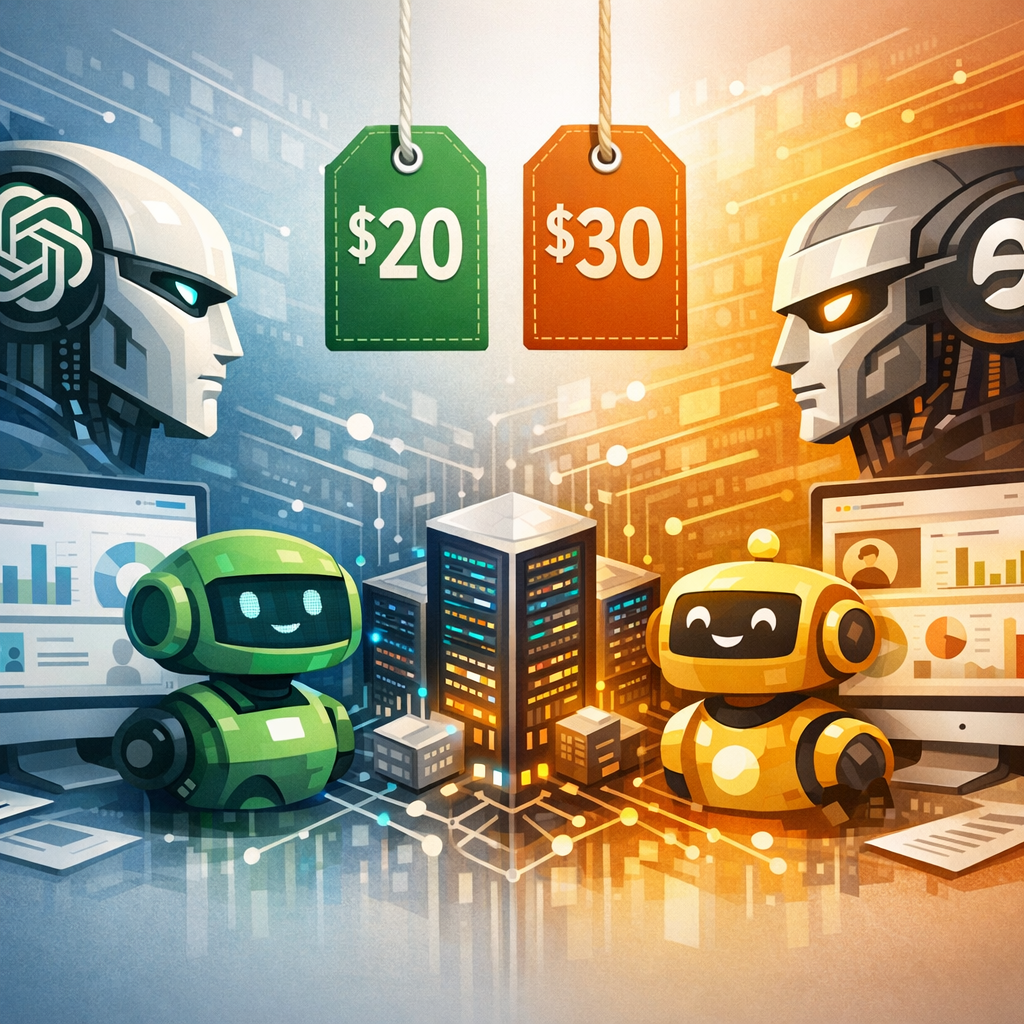
Poor AI Integration Threatens Business Productivity and Workforce Stability
Recent analysis by cloud data and AI consultancy Datatonic reveals that many organizations are jeopardizing core business pillars such as productivity, competitiveness, and efficiency due to inadequate implementation of human-AI collaboration. The consultancy stresses that the next wave of enterprise AI success depends on carefully governed AI systems designed to work alongside humans in “human-in-the-loop” (HiTL) configurations.
The Critical Role of Human-AI Collaboration
Datatonic’s research indicates that companies failing to embed AI into human workflows experience slowed productivity and fall behind competitors. A hybrid approach combining AI speed with human judgment accelerates decision-making and improves operational outcomes. Scott Eivers, CEO of Datatonic, stated, “AI [is] about redesigning how work gets done. The biggest risk we see in the market is productivity leakage when AI exists in isolation from the people who actually run the business.”
Challenges in Trust and Adoption
Despite years of investment, many AI initiatives remain in pilot stages due to limited user trust. This hesitance prevents organizations from leveraging AI insights to enhance decisions and workflows, resulting in missed efficiency gains.
Human-in-the-Loop Models as a Path Forward
Datatonic emphasizes that HiTL models, which blend AI’s processing speed with human accountability, are essential for future AI success. For example, in software development, AI can generate code from broad prompts, but human teams define requirements and review plans before implementation. This partnership ensures quality and relevance in AI outputs.
AI’s Growing Presence in Finance and Operations
AI adoption is increasingly evident in finance and back-office operations. AI-powered document processing has reportedly reduced invoice-processing costs by up to 70%, though final approvals remain under human control. Andrew Harding, CTO of Datatonic, notes, “They’re partnership stories. Humans create evaluation systems, validate plans, set guardrails, and make decisions. AI executes at speed and scale. That combination is where real enterprise value shows up.”
Governance and Security Concerns
Many enterprises struggle to deploy fully autonomous AI agents safely due to gaps in security controls and governance frameworks. Datatonic advises that autonomy can only be scaled responsibly by introducing approval checkpoints and performance benchmarks. Continuous evaluation systems are necessary to ensure AI models operate safely, comply with regulations, and meet organizational standards as they evolve.
Harding adds, “As trust builds, companies can responsibly delegate more to AI. But skipping governance doesn’t build speed, it creates risk.”
Future Outlook: AI-Augmented Expert Teams
Datatonic forecasts a significant increase in AI-assisted workloads within the next two years, with AI agents handling preparation, validation, and testing of decisions before human teams commit resources. Scott Eivers envisions “expert departments run by smaller, nimble teams – finance, HR, marketing – each amplified by AI. The companies that win will be those that teach people to work with AI – not around it.”
Fonte: ver artigo original

Related Articles
 Alibaba Launches Open-Weight Qwen 3.5 Model, Highlighting China’s Accelerating AI Development
 Skepticism Surrounds xAI’s Strategic Partnership with Anthropic and Its Implications for SpaceX
 How Ghost in the Shell Foretold the Future of Cybersecurity Three Decades Ago
 Salesforce Introduces Native Arabic Support for Agentforce in the UAE to Accelerate AI Adoption