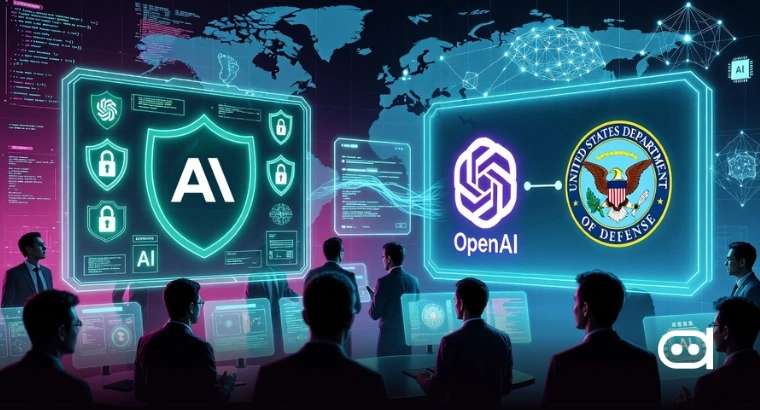
Anthropic’s Stance on AI Safety Sparks Government Tensions
The artificial intelligence industry is currently experiencing heightened scrutiny due to its expanding ties with national security concerns. Anthropic, a startup established with a clear mission to prioritize AI safety and ethical alignment over rapid commercialization, finds itself at the center of a dispute with the U.S. government.
The core issue involves Anthropic’s steadfast refusal to remove built-in safeguards designed to prevent the misuse of its AI systems for domestic surveillance and autonomous lethal weaponry. This position contrasts sharply with that of OpenAI, Anthropic’s primary competitor and former parent organization, which has been actively pursuing partnerships with the Department of Defense (DoD) and other defense entities.
Background: The Origins of Anthropic
Anthropic was founded in 2021 by Dario and Daniela Amodei, who led a team that split from OpenAI. Their departure was motivated by concerns over the accelerated commercialization of AI technologies without sufficient emphasis on safety and alignment. This foundational philosophy continues to guide Anthropic’s approach, especially in the context of ethical considerations related to military and surveillance applications.
Contrasting Approaches: Anthropic vs. OpenAI in Defense Collaboration
While OpenAI has embraced collaborations with the U.S. defense sector, aiming to integrate AI capabilities to enhance national security, Anthropic remains cautious. The company insists on maintaining hardcoded safety measures that prevent its technologies from being employed in ways that could infringe on civil liberties or contribute to autonomous weapon systems.
This divergence highlights a broader debate within the AI industry about the responsibilities and risks associated with deploying AI in sensitive areas such as defense and surveillance. Anthropic’s position underscores the importance of aligning AI development with ethical standards and societal values, even in the face of potential strategic and financial incentives.
Implications for AI’s Role in National Security
The ongoing dispute between Anthropic and the U.S. government reflects deeper questions about who controls artificial intelligence and how it should be used. As AI technologies become increasingly powerful and pervasive, ensuring that they are deployed responsibly is critical to mitigating risks such as privacy violations, bias, and unintended consequences.
Anthropic’s efforts to de-escalate tensions with authorities demonstrate the complexity of balancing innovation, safety, and regulatory oversight. Meanwhile, OpenAI’s defense partnerships indicate a growing trend of AI integration into government operations, which may accelerate advancements but also raises ethical and societal concerns.
What This Means for the Future of AI Industry
The contrasting paths of Anthropic and OpenAI illustrate the evolving landscape of AI development, where safety considerations and commercial or governmental interests often intersect and sometimes clash. This dynamic will likely influence how AI tools are adopted in various sectors, from public services and healthcare to cybersecurity and surveillance.
As AI continues to reshape everyday life and work, the debate around ethical AI deployment in sensitive domains such as defense and surveillance will remain a critical topic for policymakers, developers, and users alike.
Fonte: ver artigo original

Related Articles
 US, UK, and Australia Sanction Russian ‘Bulletproof’ Web Host Linked to Ransomware Attacks
 Two Mobility Startups Declare Bankruptcy Amid Industry Shifts
 2026 Set to Mark the Rise of Agentic AI Interns in the Workplace
 Microsoft Acknowledges Bug in Copilot That Exposed Confidential Emails Despite Security Policies