World Labs Raises $1 Billion to Revolutionize AI Spatial Intelligence
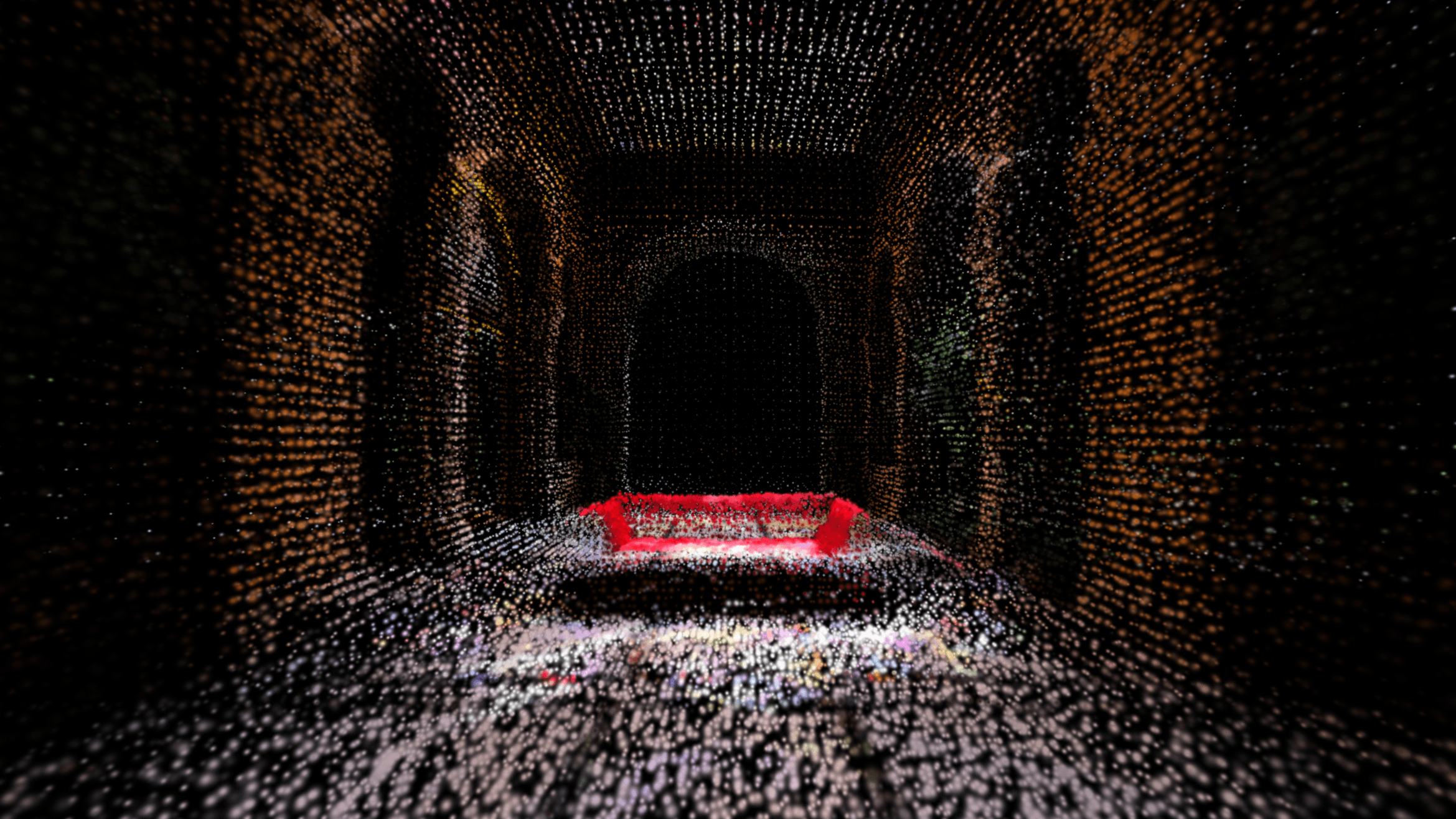
World Labs, the artificial intelligence company led by renowned AI expert Fei-Fei Li, has successfully raised $1 billion in a recent funding round. This substantial capital injection aims to accelerate the development of AI systems that can comprehend and operate within the three-dimensional environment, a concept known as spatial intelligence.
Understanding the Three-Dimensional World Through AI
Traditional AI models have excelled in processing text and images but often struggle with grasping the complexities of physical space. World Labs is pioneering an approach that leverages “world models” — advanced AI frameworks designed to simulate and interpret spatial relationships and dynamics. These models enable AI to better predict, plan, and interact with objects and environments much like humans do.
Implications for Everyday Life and Industry
The ability for AI to understand spatial contexts opens doors to numerous applications across various sectors. From enhancing robotics and autonomous vehicles to improving augmented reality experiences and smart home technologies, spatial intelligence has the potential to transform how AI integrates into daily life and work.
Fei-Fei Li, who co-directs the Stanford Institute for Human-Centered AI, has long advocated for AI that understands the world in a human-like way. This funding round marks a significant milestone in bringing that vision closer to reality.
AI Trends and the Broader Impact
The surge in investment for spatial intelligence reflects a broader trend in artificial intelligence focused on moving beyond narrow task-specific systems towards more generalizable and context-aware AI. As companies increasingly seek to deploy AI solutions that can navigate and manipulate the physical world, innovations from World Labs could set new industry standards.
Looking Ahead
With this new capital, World Labs plans to expand its research and development efforts, attract top talent, and collaborate with partners to accelerate the commercialization of spatially intelligent AI technologies. The progress made here is expected to influence AI applications in healthcare, manufacturing, logistics, and beyond.
Fonte: ver artigo original

Related Articles
 Bernie Sanders’ Attempt to Uncover AI Secrets Backfires, Highlighting Chatbot Agreeableness
 New ETSI Standard Sets Global Benchmark for AI Security in Enterprises
 Meta Expands Solar Energy Capacity to Power New AI Data Center in South Carolina
 Multimodal AI Models Struggle to Surpass 50% Accuracy in Visual Entity Recognition