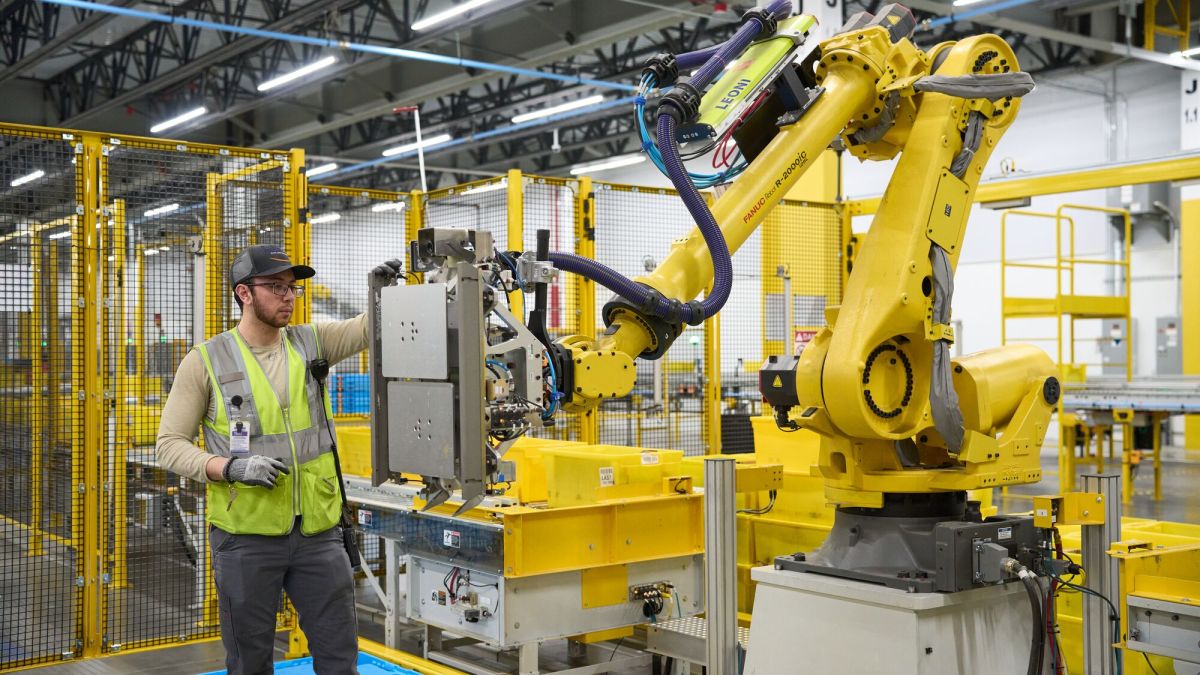
Amazon Ends Blue Jay Robotics Project
Amazon recently announced the termination of its Blue Jay robotics project, less than half a year after its inception. This move reflects the company’s ongoing strategy to optimize its investments in artificial intelligence and robotics technologies.
Integration of Blue Jay’s Technology into Other Projects
Instead of discarding the advancements made through Blue Jay, Amazon revealed that the core technological components developed during the project will be repurposed for other robotics initiatives within the company. This strategy aligns with Amazon’s broader approach to leveraging AI and robotics to enhance operational efficiency and innovation.
Employee Reassignment to New Ventures
The employees who contributed to Blue Jay’s development have not been laid off but reassigned to other projects. This internal mobility underscores Amazon’s commitment to retaining talent and fostering expertise in AI-driven robotics solutions across its various business units.
Context: Robotics and AI in the Workplace
The robotics sector is rapidly evolving, with AI playing a critical role in reshaping how companies approach automation and productivity. Amazon’s decision to halt Blue Jay highlights the dynamic nature of AI projects, where continuous evaluation and realignment are necessary to stay competitive and efficient.
As AI tools become increasingly integral to workplace productivity, initiatives like Blue Jay represent experimental steps toward integrating intelligent automation into complex operational environments. Amazon’s pivot suggests a strategic focus on consolidating AI capabilities rather than spreading resources across multiple parallel projects.
Implications for AI and Robotics Development
This development invites broader reflections on how large corporations manage AI innovation. The repurposing of technology and workforce demonstrates a pragmatic approach, balancing innovation risks with the need for steady progress in AI applications.
Industry experts note that such decisions are common in technology sectors where rapid iteration and adaptability are critical. Amazon’s approach may serve as a model for other companies navigating the challenges of AI integration and robotics deployment.
Looking Ahead
While the Blue Jay project itself is discontinued, its legacy will likely influence Amazon’s future robotics endeavors. The consolidation of AI technologies promises to accelerate advancements that could impact logistics, warehousing, and other operational areas where Amazon is heavily invested.
As AI continues to transform everyday life and work, corporate strategies that emphasize flexibility and resource optimization will be key to harnessing the full potential of these emerging technologies.
Fonte: ver artigo original

Related Articles
 Anthropic Introduces Claude Fast Mode Offering Speed Boost at a Premium Cost
 Alibaba Unveils Qwen3.7-Plus: Advancing Multimodal AI Toward Autonomous Agents
 NexTech Summit 2026 Highlights Future of Enterprise Technology and AI in India
 Microsoft’s New Gaming CEO Commits to Quality Over Quantity in AI Integration