
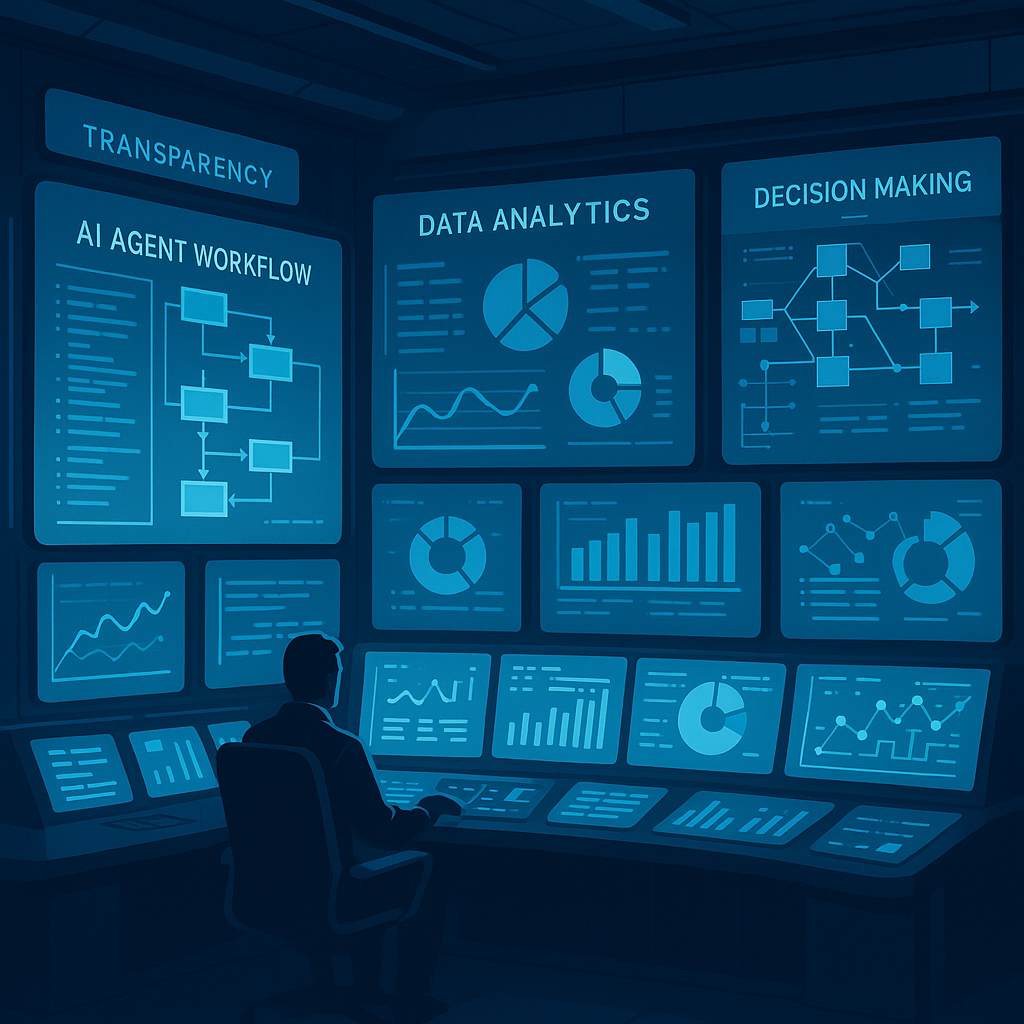
Salesforce Launches Advanced AI Monitoring Tools for Transparent Agent Decision-Making
On Thursday, Salesforce announced the release of Agentforce Observability, an innovative suite of monitoring capabilities integrated into its Agentforce 360 Platform. This development aims to tackle one of the most persistent challenges in enterprise artificial intelligence: the opacity surrounding AI agents’ decision-making during real customer interactions.
As organizations increasingly rely on autonomous AI agents to manage complex tasks, executives often find themselves unable to understand or trace the rationale behind these agents’ actions. Agentforce Observability offers granular visibility into each step AI agents take, including their reasoning paths and safety guardrails triggered during operation. This transparency is crucial as companies seek to balance the efficiency benefits of AI with the need for control and trust.
“You can’t scale what you can’t see,” stated Adam Evans, Executive Vice President and General Manager of Salesforce AI, highlighting the urgency for robust monitoring tools amid a reported 282% increase in AI deployments by businesses.
Addressing the AI Transparency Gap in Enterprise Deployments
AI agents have proven capable of resolving customer inquiries and managing operations effectively, yet the mechanisms behind these successes often remain a ‘black box.’ When errors or edge cases occur, businesses traditionally lack the diagnostic tools to investigate or mitigate issues efficiently.
Gary Lerhaupt, Vice President of Salesforce AI and lead on the observability initiative, described Agentforce Observability as more than a monitoring system — it functions as a mission control center to analyze and optimize AI agent performance. He emphasized the delivery of business-specific metrics, such as engagement rates in service contexts or lead conversion statistics in sales, which conventional monitoring solutions typically overlook.
Real-World Impact: Case Studies from 1-800Accountant and Reddit
Early adopters have reported significant benefits from the new observability tools. Ryan Teeples, CTO of 1-800Accountant, revealed that deploying Agentforce agents to handle sensitive tax inquiries and appointment scheduling demanded unparalleled transparency. The AI agents leverage integrated data sources, including audit logs and IRS publications, to provide immediate, autonomous responses.
“Observability gives us full trust and transparency with every agent interaction in one unified view,” Teeples remarked. The tools uncovered unexpected insights into agent reasoning, enabling rapid diagnosis of performance gaps and the configuration of effective guardrails. Notably, Agentforce managed over 1,000 client interactions within the first 24 hours post-deployment, facilitating projections for 40% client growth without additional staffing and allowing CPAs to concentrate more on advisory services.
Similarly, Reddit’s deployment of Agentforce for advertiser support has led to a 46% deflection rate of support cases. John Thompson, Vice President of Sales Strategy and Operations, emphasized that comprehensive observability allows the company to understand not only issue resolution rates but also the decision-making processes AI agents employ.
Technical Foundations: Session Tracing and Agent Fabric
Salesforce’s observability system relies on two core components. The Session Tracing Data Model meticulously logs every user input, AI response, reasoning step, language model invocation, and safety check, securely storing this data in Salesforce’s Data 360 platform. This approach delivers unified, session-level visibility into agent behavior.
To combat the growing complexity of managing numerous AI agents, Salesforce introduced MuleSoft Agent Fabric. This tool offers a consolidated dashboard, termed the ‘single pane of glass,’ providing oversight across all agents—including those developed outside the Salesforce ecosystem. Agent Fabric’s visualizer maps entire agent networks, enhancing operational transparency.
The suite’s functionalities span three key areas:
- Agent Analytics – monitoring performance metrics, KPI trends, and identifying ineffective behaviors;
- Agent Optimization – delivering end-to-end interaction visibility, clustering similar requests, and highlighting configuration issues;
- Agent Health Monitoring – offering near real-time health metrics and alerting on critical errors and latency, with general availability targeted for Spring 2026.
Pierre Matuchet, SVP of IT and Digital Transformation at Adecco, praised the observability tools for fostering confidence even during preliminary testing phases, citing the AI’s ability to handle unexpected user interactions responsibly.
Competitive Positioning Against Major Cloud Providers
Salesforce enters direct competition with Microsoft, Google, and Amazon Web Services, all of which provide integrated AI monitoring within their platforms. Lerhaupt contends that enterprises require more comprehensive visibility than these basic offerings deliver.
“Observability is included out-of-the-box with Agentforce at no additional cost,” he explained. The solution captures exhaustive telemetry and reasoning data, enabling detailed analysis and session quality scoring to continuously improve AI agents’ effectiveness.
This positions Salesforce’s offering as a specialized observability layer that extends beyond generic cloud provider tools, addressing the need for full transparency into every agent interaction and decision.
From Pilot to Production: The Expanding Scale of AI Agent Deployments
A critical question remains whether Salesforce’s tools address imminent enterprise needs or anticipate a future growth trajectory. While the reported 282% increase in AI adoption is notable, it does not differentiate between pilot programs and full-scale production deployments.
Lerhaupt outlined a three-stage progression for enterprises: building foundational trust, transforming ideas into practical AI applications, and scaling successes to enterprise-wide impact. Examples include 1-800Accountant’s 70% autonomous chat resolution rate, Williams Sonoma’s delivery of over 150,000 AI experiences monthly, and Falabella’s rapid growth to 600,000 AI workflows per month.
With more than 12,000 customers across 39 countries executing 1.2 billion AI workflows via Agentforce, Salesforce indicates the transition from experimental to production usage is underway.
The Imperative of Continuous Monitoring Post-Deployment
Salesforce emphasizes that AI agent management extends beyond initial build, test, and deploy phases. Unlike traditional software, AI agents adapt and evolve, making continuous monitoring essential to detect behavioral drifts or emergent failure modes under real-world conditions.
“Building an agent is just the beginning,” Lerhaupt noted. “Transparency around agent behavior and outcomes is critical to optimize customer experience and maintain trust.”
Ryan Teeples echoed this by stating that without observability, expansion of AI deployment would be hindered. Plans at 1-800Accountant include integrating Slack workflows, deploying Service Cloud Voice, and utilizing Tableau for conversational analytics—all dependent on the confidence provided by observability.
Trust as the Central Barrier to AI Agent Scaling
Customer feedback consistently highlights trust as the chief obstacle to widespread AI agent adoption. While technological capabilities, infrastructure, and business incentives align, executive confidence remains elusive without clear insight into AI behavior.
Salesforce positions Agentforce Observability not merely as a monitoring tool but as a management framework akin to supervising human employees. This analogy underscores the need for ongoing supervision, feedback, and optimization, leveraging the unique ability to track every AI decision and reasoning step in detail.
This granular monitoring offers an unprecedented opportunity for continuous improvement but also necessitates organizational commitment to act on the insights gathered.
Ultimately, the companies that achieve profound visibility into their AI agents’ operations will advance from cautious pilots to confident, large-scale deployments. In the evolving landscape of autonomous AI, observability is emerging as a critical enabler of trust and operational success.

Related Articles
 OpenAI’s ChatGPT Images 2.0 Revolutionizes Graphic Generation with Reasoning and Web Search
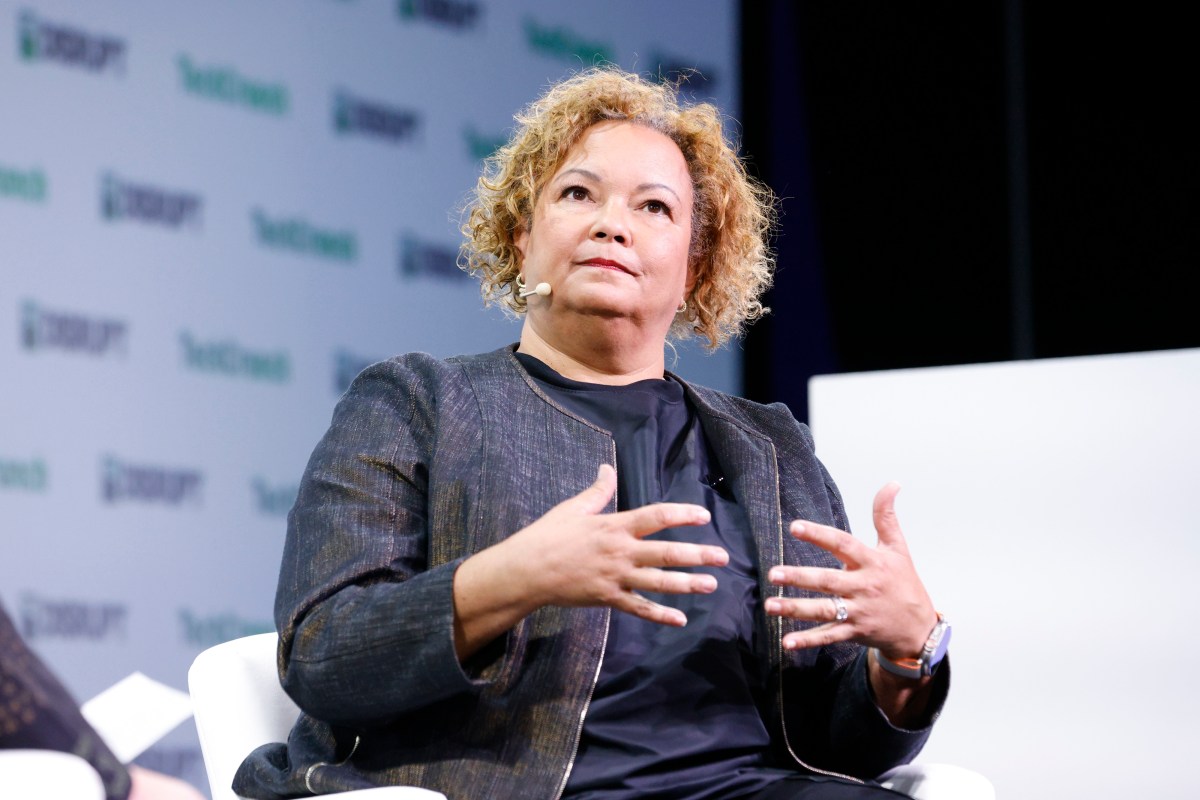 Apple Faces Executive Turnover with Departures of General Counsel and Environmental VP
 Rising Data Center Electricity Consumption Raises Blackout Risks Amid Winter Storms
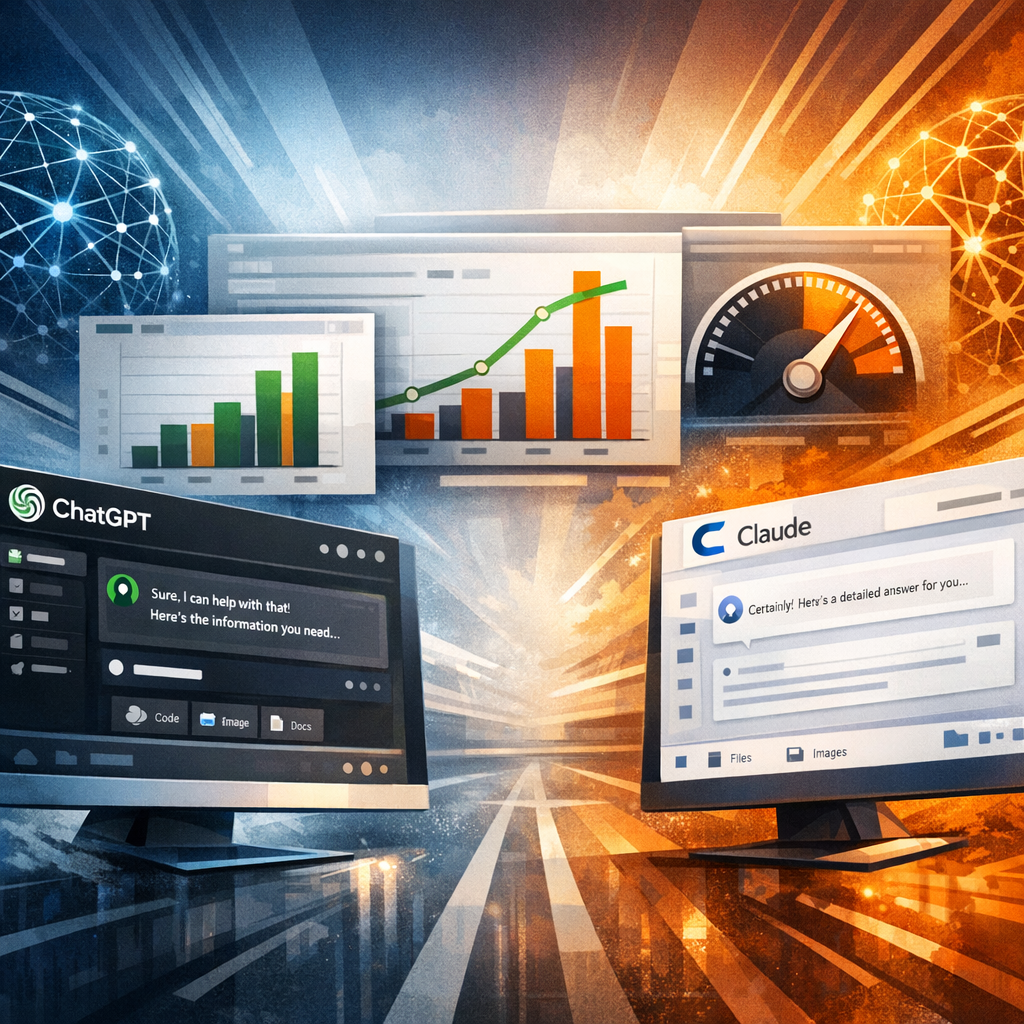 Why Claude Opus 5 Puts OpenAI and ChatGPT Under Pressure



