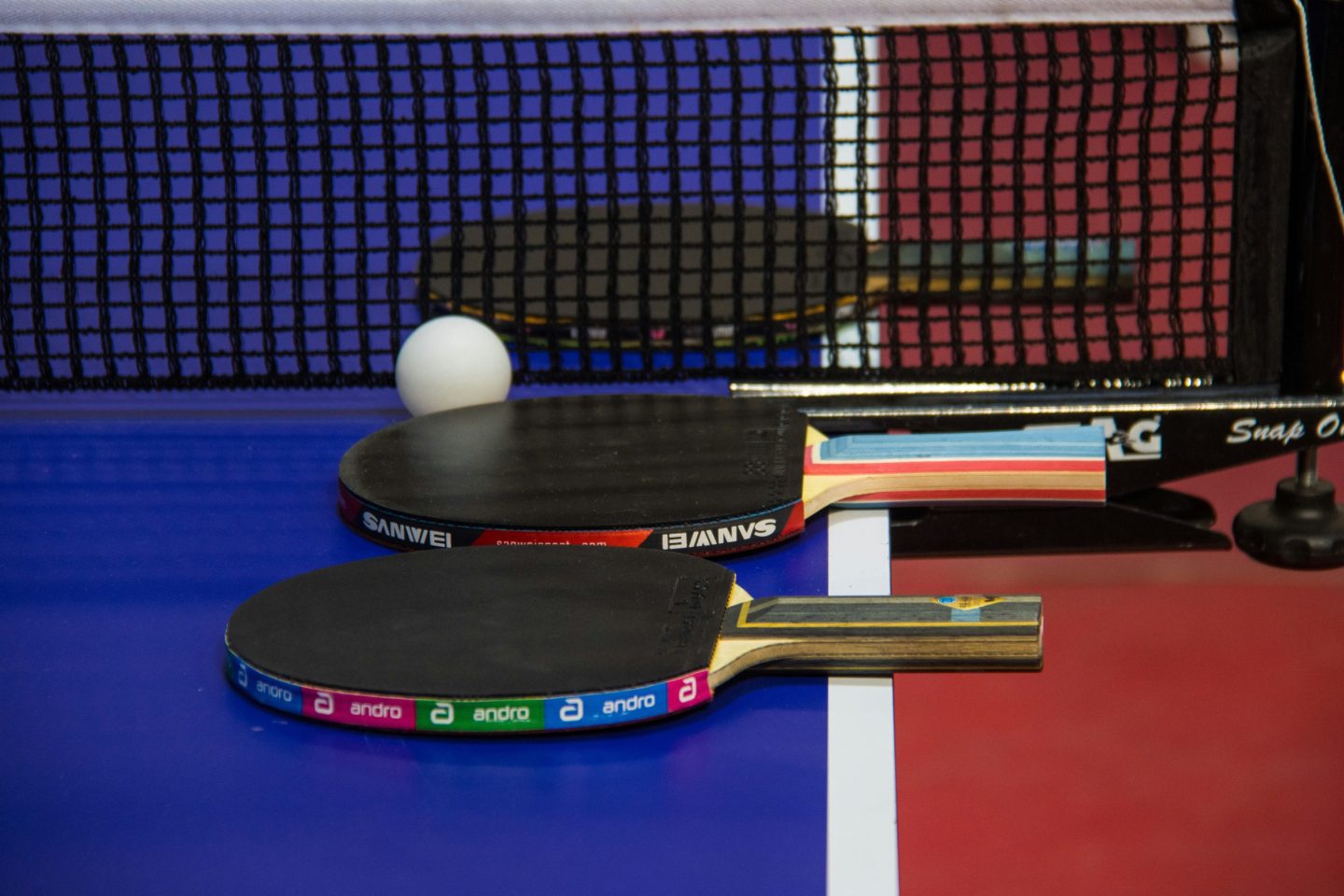
AI-Powered Table Tennis Robot Beats Elite Human Players
Sony AI has unveiled a groundbreaking autonomous table tennis robot named Ace that has competed against and defeated high-level human players in officially regulated matches. This development marks a significant milestone in the field of physical AI, where artificial intelligence is integrated into machines performing tasks in real-world environments.
Ace was engineered to excel in a fast-paced sport that demands rapid decision-making and precise motor control. The robot combines high-speed visual perception with AI-driven control systems to execute shots under competitive conditions. It features an architecture with nine synchronized cameras and three vision systems to track the ball’s complex spin and trajectory in real time, processing movements too fast for the human eye.
During trials conducted under International Table Tennis Federation rules, Ace won three out of five matches against elite players in April 2025 and achieved victories against professional opponents in subsequent matches through early 2026. Unlike previous table tennis robots from the 1980s, which could not match advanced human performance, Ace was trained using simulation rather than human demonstration, allowing it to develop unique strategies and playstyles.
Peter Dürr, director at Sony AI Zurich and project lead, emphasized the challenges of physical sports AI compared to digital games. He noted that while AI has dominated fully simulated games like chess and video games, real-time physical sports remain a major challenge due to the speed and unpredictability involved.
Professional players who faced Ace acknowledged its unpredictability and precision. Mayuka Taira, who lost to the robot, highlighted how Ace’s lack of emotional cues made it difficult to anticipate its shots, while Rui Takenaka noted its proficiency in handling complex spins.
Applications Beyond Sports
The project team indicated that the perception and control technologies developed for Ace have broader applications, particularly in manufacturing and service robotics, where speed and accuracy in dynamic environments are crucial.
Humanoid Robots Compete in Beijing Half Marathon
In a separate event, the 2026 Beijing E-Town Humanoid Robot Half Marathon featured over 100 humanoid robots racing alongside approximately 12,000 human runners on separate tracks. The robot “Lightning,” developed by Honor, completed the 21-kilometer course in 50 minutes and 26 seconds, outperforming Olympic runner Jacob Kiplimo’s time of 57 minutes and 20 seconds at the Lisbon Half Marathon.
Despite colliding with a barricade during the race, Lightning maintained its lead and finished first. Honor’s robots also secured second and third places, showing a marked improvement from the previous year when the fastest robot took over two hours to complete the course. Another Honor robot completed the course in 48 minutes under remote control, but race rules prioritized autonomous navigation, making Lightning the official winner.
Honor engineers highlighted that technologies such as structural reliability and liquid-cooling systems developed for the robots are transferable to industrial applications, underscoring the potential impact of humanoid robotics beyond competition.
Implications for AI and Robotics Development
These achievements illustrate the rapid progress in AI-powered robotics, blending advanced perception, control, and autonomous decision-making. The table tennis robot Ace exemplifies how AI can master complex physical tasks requiring split-second responses and precise motor skills, while the humanoid robots’ long-distance race performance demonstrates endurance and autonomous navigation capabilities.
Such advancements are setting new benchmarks in AI research and practical applications, potentially transforming sectors like manufacturing, logistics, and service industries. They also raise important discussions about the future integration of AI in daily life and work environments.
Fonte: ver artigo original

Related Articles
 Google Reports Data Theft from 200 Companies Following Gainsight Security Breach Linked to Scattered Lapsus$ Hackers
 Tencent to Accelerate AI Investment Amid Improved Domestic Chip Production in China
 Microsoft Acknowledges Bug in Copilot That Exposed Confidential Emails Despite Security Policies
 Alibaba’s HopChain Framework Enhances AI Vision Models for Complex Multi-Step Reasoning