
Transforming Industrial Safety and Efficiency with Physical AI
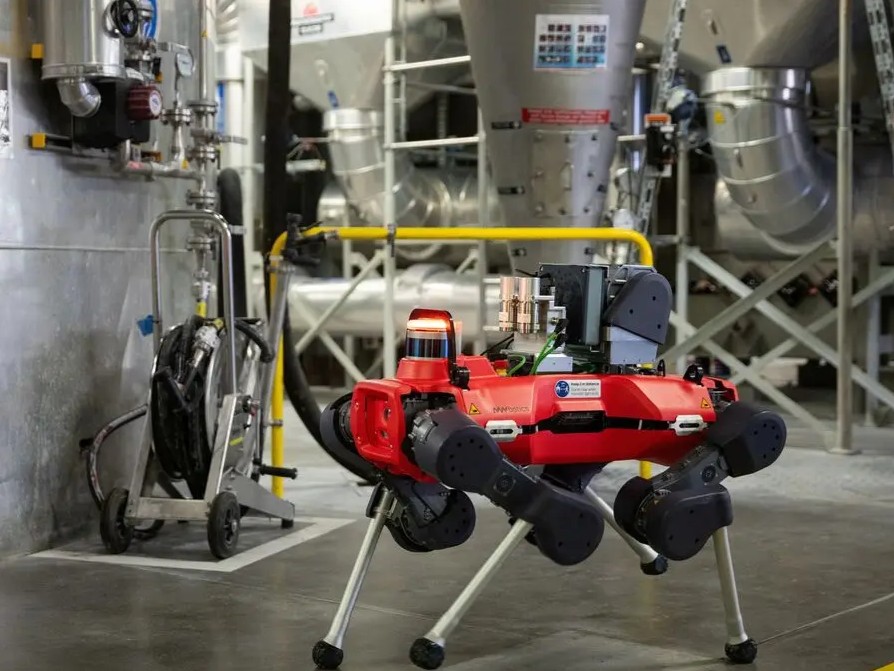
Heavy industries often require human workers to inspect hazardous and challenging environments, which is costly and poses significant safety risks. To address these challenges, Swiss robotics company ANYbotics has partnered with enterprise software leader SAP to connect autonomous four-legged robots directly to SAP’s backend enterprise resource planning (ERP) system. This integration transforms robots from standalone tools into vital mobile data-gathering components within an industrial Internet of Things (IoT) network.
Seamless Integration of Robotics and Business Workflows
By embedding ANYbotics’ autonomous robots into SAP’s ERP infrastructure, companies can automate and accelerate the detection and reporting of equipment issues. Traditionally, workers might notice anomalies such as unusual noises or overheating in machinery but face delays in documenting and escalating these concerns. These lags can lead to costly equipment failures.
The robots are equipped with thermal, acoustic, and visual sensors that continuously monitor equipment condition. Their onboard artificial intelligence processes data locally using edge computing, reducing bandwidth needs by transmitting only critical alerts—such as a specific fault and its location—to SAP’s asset management module in real time.
Eliminating Reporting Delays and Enhancing Maintenance
This direct communication enables immediate generation of maintenance requests without human intervention, accelerating repairs and minimizing downtime. For example, if a robot detects an irregular motor frequency, it automatically informs SAP, which then checks inventory for spare parts, estimates potential downtime costs, and schedules a technician.
The approach replaces subjective human assessments with objective, consistent data-driven evaluations, improving reliability in maintenance decisions.
Addressing Infrastructure and Security Challenges
Industrial environments often suffer from poor network connectivity due to physical obstructions and interference. To overcome this, deployments commonly utilize private 5G networks to ensure extensive coverage and secure data transmission within large facilities. The use of zero-trust network protocols further safeguards the system by continuously verifying robot identities and limiting their access within SAP’s modules, mitigating risks associated with potential cyberattacks.
Managing Data Volume and Accuracy
The robots generate vast amounts of unstructured data, requiring middleware solutions to filter and translate telemetry into SAP-compatible formats. This prevents maintenance teams from being overwhelmed by false alerts and ensures that only genuine issues trigger work orders. Moreover, organizing this data supports long-term machine learning initiatives aimed at predictive maintenance, further reducing equipment failures.
Human Factors and Rollout Strategies
Introducing robots into industrial settings can create workforce apprehension regarding job security. Companies must clearly communicate that the objective is to enhance safety by removing humans from dangerous zones, not to replace workers. Instead, personnel shift focus toward analyzing data and performing targeted repairs.
Successful adoption demands retraining workers to manage SAP dashboards, automated maintenance tickets, and robot operations, with the option for manual override when necessary. Gradual implementation through pilot programs in controlled areas with robust internet connectivity allows organizations to validate data accuracy and system reliability before scaling up.
Looking Ahead: The Future of Physical AI in Industry
The integration of autonomous robots with enterprise software heralds a new era of industrial management where real-time, data-driven insights improve safety, reduce costs, and optimize maintenance workflows. Achieving this potential requires meticulous attention to network infrastructure, data governance, and human collaboration.
As these technologies mature, companies can expect not only immediate operational benefits but also opportunities to leverage accumulated data for advanced predictive analytics, ultimately transforming heavy industry through physical AI.
Fonte: ver artigo original

Related Articles
 Nordic Tech Founders Scale Up Boldly, Driving Regional AI Startup Success
 Snap’s SnapGen++ Delivers High-Resolution AI Images on iPhone in Under Two Seconds
 China Accelerates Brain-Computer Interface Industry with Strong Policy and Investment Support
 Meta Unveils WorldGen: Generative AI Transforms Creation of Interactive 3D Worlds



