Manufacturers are navigating a challenging landscape marked by increasing input costs, labor shortages, fragile supply chains, and growing demand for customized products. To overcome these pressures, artificial intelligence (AI) is becoming an essential strategic tool within the manufacturing sector.
AI as a Cornerstone of Enterprise Manufacturing Strategy
The primary goals for most manufacturers remain reducing costs while enhancing throughput and ensuring quality. AI technologies are directly supporting these objectives by enabling predictive maintenance, optimizing production schedules, and interpreting complex supply-chain data.
A recent survey by Google Cloud revealed that over 50% of manufacturing executives have integrated AI agents into back-office functions such as planning and quality assurance. This shift from pilot projects to embedded AI workflows is significant as it directly correlates with improved business outcomes — including reduced downtime, less scrap, higher overall equipment effectiveness (OEE), and enhanced responsiveness to customer needs.
Industry Success Stories Highlight AI’s Impact
-
Motherson Technology Services reported substantial improvements after adopting agent-based AI and consolidating data platforms. Their results include a 25-30% cut in maintenance costs, a 35-45% reduction in downtime, and a 20-35% increase in production efficiency.
-
ServiceNow emphasized the unification of workflows, data, and AI on integrated platforms. Their research showed that just over half of advanced manufacturers have implemented formal data governance programs to support AI initiatives.
These examples illustrate that AI deployment is moving beyond experimental stages, becoming a core part of operational workflows.
Key Considerations for Cloud and IT Leaders in Manufacturing
Data Architecture and Integration
Manufacturers require near real-time decision-making capabilities, especially for maintenance and quality control. Combining edge computing devices with cloud infrastructure is critical. However, legacy equipment and data silos remain challenges, so standardizing data collection, storage, and sharing is often a necessary first step.
Use-Case Prioritization and Scaling
Industry experts recommend initiating AI projects with two or three high-impact use cases, such as predictive maintenance, energy optimization, and quality inspection. This approach helps avoid the pitfalls of pilot projects that fail to scale.
Governance and Cybersecurity
Integrating operational technology (OT) with IT and cloud systems introduces new cybersecurity risks, as many OT systems were not designed for internet exposure. Establishing clear data access controls and continuous monitoring from the outset is crucial to safeguard manufacturing environments.
Workforce Development
Human expertise remains indispensable. Building trust in AI-supported systems among operators and providing ongoing upskilling programs addresses persistent skilled labor shortages in manufacturing.
Vendor Ecosystem Neutrality
Manufacturing environments typically involve a complex mix of IoT sensors, industrial networks, cloud platforms, and workflow tools. Prioritizing interoperability and avoiding vendor lock-in ensures long-term flexibility tailored to specific organizational workflows.
Performance Measurement
Defining and continuously monitoring metrics such as downtime hours, maintenance costs, throughput, and yield enables manufacturers to benchmark success and refine AI models and processes effectively.
Challenges and Realities Beyond the AI Hype
Despite promising advances, manufacturers face ongoing challenges including skill gaps, fragmented data from legacy machinery, and unpredictable deployment costs. Increased connectivity raises cybersecurity concerns. Importantly, AI systems must complement human expertise, with collaboration between operators, engineers, and data scientists being essential.
Nevertheless, with robust governance, cross-functional teams, and scalable architectures, these challenges are manageable, making AI deployment sustainable and impactful.
Strategic Recommendations for Manufacturing Leaders
- Align AI initiatives tightly with business goals and key performance indicators such as downtime and cost reduction.
- Adopt a hybrid edge-cloud infrastructure, performing real-time processing close to equipment and using the cloud for analytics and training.
- Invest in multidisciplinary teams and provide comprehensive training for operators and management.
- Implement security protocols early, treating OT and IT as integrated environments with zero-trust principles.
- Scale AI deployments gradually, validating value in individual plants before broader rollout.
- Favor open standards and modular ecosystems to maintain flexibility and avoid vendor lock-in.
- Continuously monitor performance metrics and adapt models and workflows as operational conditions evolve.
Conclusion
AI has become a vital component of manufacturing strategy, driving measurable improvements in efficiency, cost reduction, and product quality. Leading manufacturers demonstrate that combining data, technology, skilled personnel, and clear governance can make AI a practical lever for enhancing competitiveness in a demanding global market.
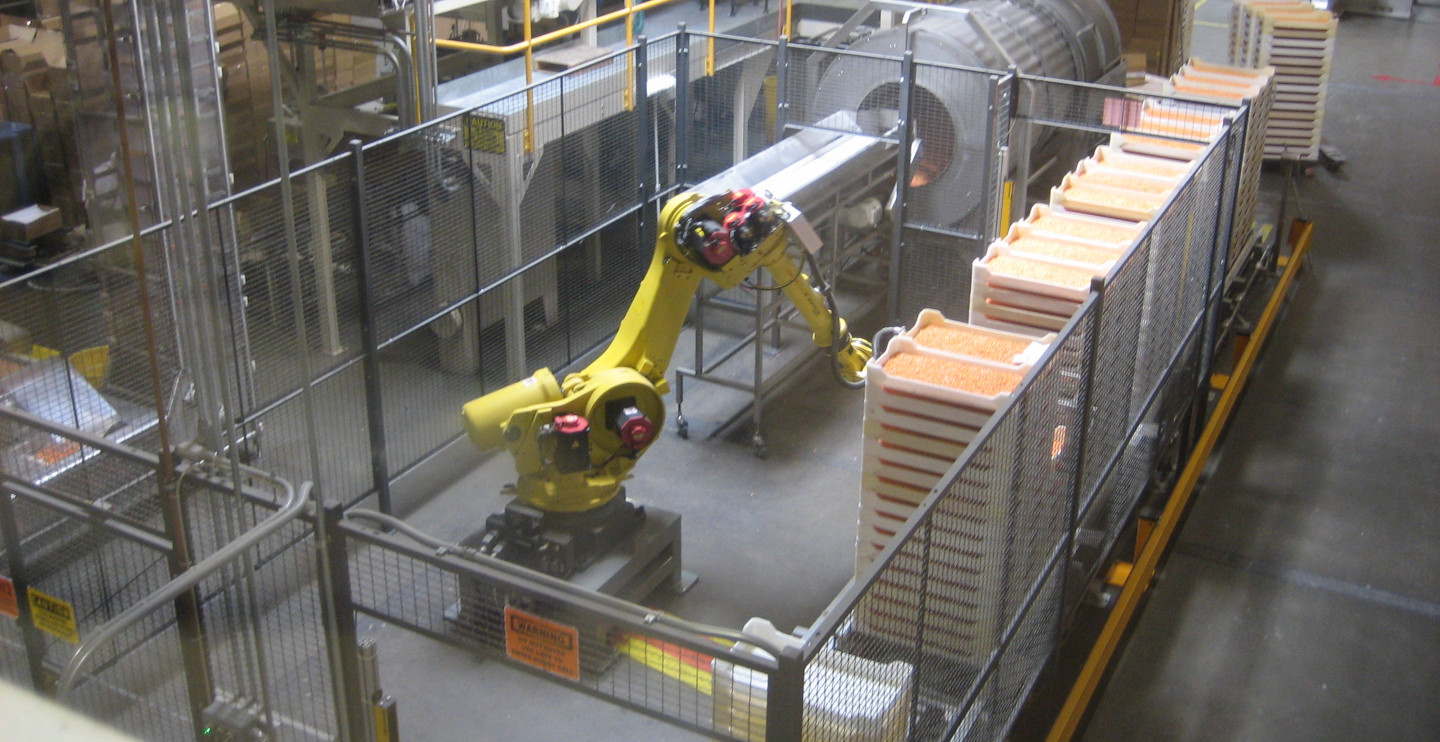
(Image source: “Jelly Belly Factory Floor” by el frijole is licensed under CC BY-NC-SA 2.0.)
Fonte: ver artigo original

Related Articles
 Study Reveals Instacart May Charge Some Shoppers Up to 20% More for Identical Products
 Telehealth Startup Medvi’s $1.8 Billion Revenue Fueled by AI-Driven Fake Advertising
 ChatGPT: Comprehensive Overview of the AI Chatbot Evolution and Updates
 Google Launches Gemma 4: A Breakthrough AI Model Running Offline on Any Device